
written by: News Desk
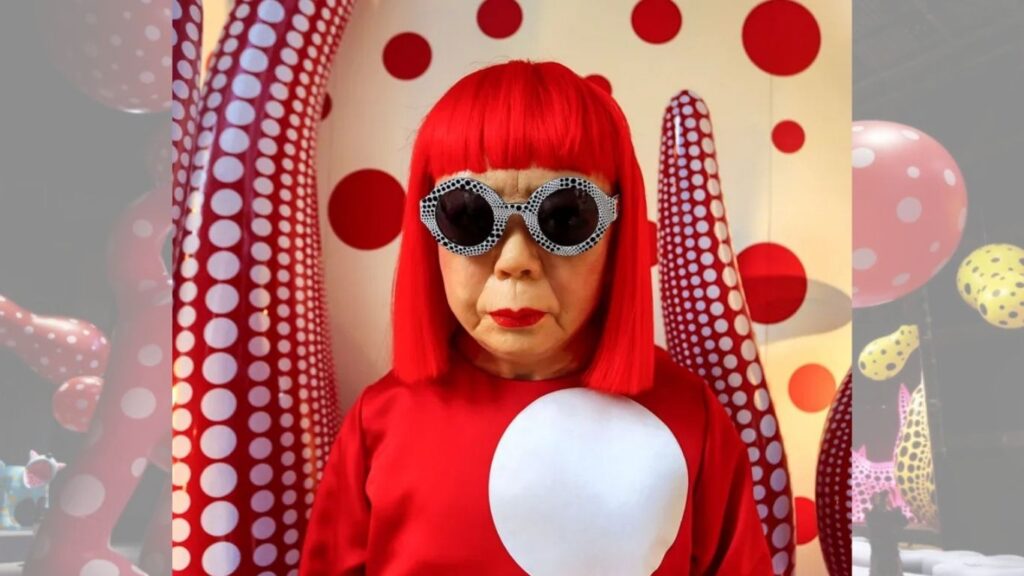
A dot—however small it may appear—can become a gateway to an entire universe in the art of Yayoi Kusama. Through recurring dots, net-like patterns, infinite reflections, pumpkin sculptures and immersive installations, the Japanese artist has transformed personal experiences, memories, psychological landscapes and the vastness of the cosmos into a distinctive visual language.
Born on March 22, 1929, in Matsumoto, Nagano Prefecture, Japan, Kusama is today regarded as one of the most influential and recognisable artists of contemporary art. Her long artistic career is not merely the story of developing an individual aesthetic vocabulary; it is also an extraordinary example of how deeply personal experiences can be transformed into a universal language of art.
From Personal Experience to Artistic Language
From an early age, Kusama experienced unusual visual phenomena. Objects, flowers, walls and people around her would sometimes appear to be covered with countless dots and repetitive patterns. These experiences left a profound imprint on her artistic consciousness.
Rather than treating these experiences solely as a source of personal distress, she gradually transformed them into artistic material. The dots, repetition and sense of infinite expansion that later became hallmarks of her practice can be traced back to these early encounters.
Kusama initially studied the traditional Japanese Nihonga style. However, she soon felt that conventional artistic structures could not fully accommodate the breadth of her creative vision. In search of a new artistic language, she moved to the United States in 1957 and eventually settled in New York.
New York and the Rise of ‘Infinity Net’
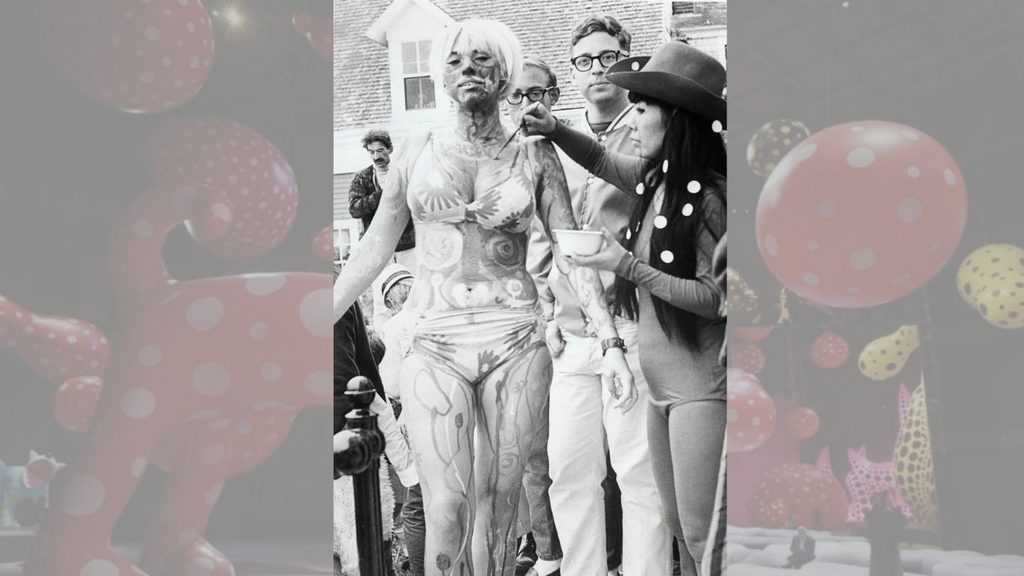
New York in the 1960s was a dynamic centre of contemporary art, where Pop Art, Minimalism, performance and experimental practices were rapidly developing. It was within this environment that Kusama began establishing her distinctive position, particularly through her ‘Infinity Net’ series.
Constructed from countless repetitive lines and net-like patterns, these paintings create an overwhelming sense of boundlessness. There is often no obvious centre; as the eye attempts to follow one line or pattern, it becomes absorbed into another repetition.
In Kusama’s practice, repetition is far more than a decorative device. It becomes a metaphor for existence, dissolution and the relationship between the individual self and infinity.
‘Self-Obliteration’: Dissolving into Infinity
One of the central concepts in Kusama’s artistic philosophy is ‘Self-Obliteration’—the dissolution of the individual self into a larger state of existence.
The endless repetition of dots in her work moves the individual beyond the boundaries of a separate identity and places them within a broader cosmic landscape. Kusama has consistently explored the relationship between human beings, nature and the universe as parts of a larger whole.
Her polka dots, therefore, are not simply a visual motif. They simultaneously evoke the smallness of the individual and the infinite scale of the cosmos.
Constructing Infinity Through Mirrors
Among the most recognisable and experiential aspects of Kusama’s practice are her ‘Infinity Mirror Rooms’. Using mirrors, light and reflection, these immersive environments transform the viewer into an integral part of the artwork.
A confined room, multiplied through reflection, becomes an illusion of endless space. The viewer does not simply look at the artwork; they enter into it.
This immersive quality allows Kusama’s installations to move beyond conventional modes of viewing art. Instead of standing outside a static object, the viewer becomes conscious of their own body, position and presence within the work.
The Pumpkin as a Vessel of Memory
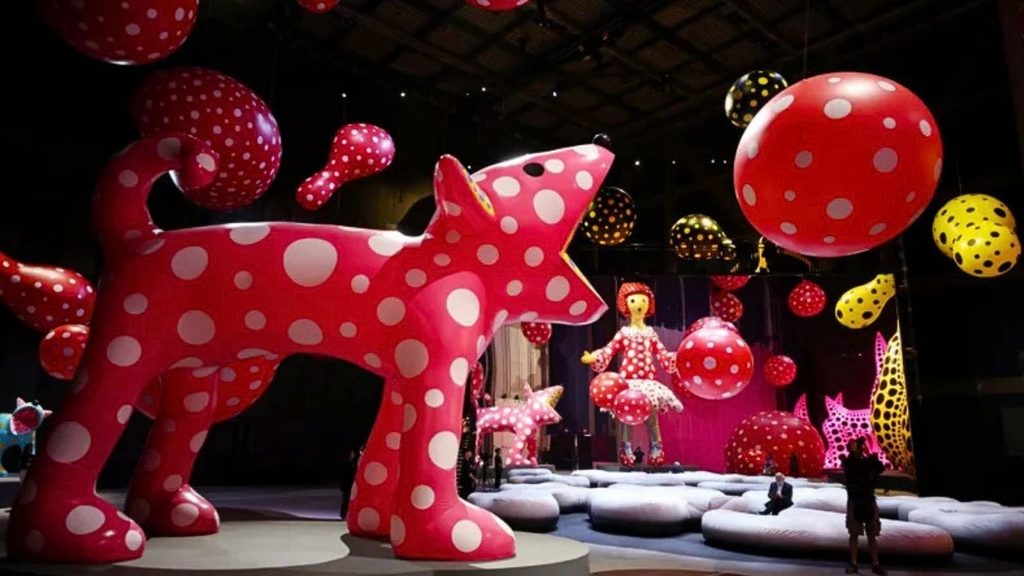
Another iconic element of Kusama’s artistic vocabulary is the pumpkin. Her bright yellow pumpkins covered with black dots have become instantly recognisable symbols within her sculptural and installation practice.
The pumpkin is also connected to Kusama’s personal memories. A familiar element from her childhood, it gradually became a recurring symbol associated with memory, familiarity and a sense of security.
Her pumpkins are therefore simultaneously playful, visually striking and deeply personal.
‘Narcissus Garden’ and the Art Market
Presented in Venice in 1966, ‘Narcissus Garden’ marked another significant moment in Kusama’s career. Comprising hundreds of reflective metallic spheres, the work repeatedly returns the viewer’s own image.
Through this multiplication of reflections, the installation raises questions about self-identity, narcissism and the commodification of art. It demonstrates that Kusama’s practice extends beyond personal and psychological experience into broader questions surrounding the art world and consumer culture.
Beyond the Boundaries of Medium
It is difficult to confine Kusama’s practice to a single medium. From painting and sculpture to installation and performance, and from literature to large-scale environmental works, she has continually explored new ways of expressing her ideas.
Line, dot, colour, pattern, reflection, repetition, space and light all function as carriers of meaning within her work. For this reason, Kusama’s art cannot be fully understood simply through its visual appeal; its psychological and philosophical dimensions are equally significant.
Artist, Writer and Seeker of the Self
Kusama’s creative practice extends beyond visual art. She has written novels, poetry and autobiographical works. Themes of solitude, memory, psychological experience, love, death and infinity also recur throughout her literary practice.
Viewed alongside her visual work, her writing reveals a consistent concern at the heart of her long creative journey: an ongoing attempt to understand the self.
From the Margins to the Mainstream
Kusama’s early career was far from easy. As a Japanese woman working within the predominantly male art scene of New York, she encountered considerable institutional and social barriers. For years, her contributions did not receive the recognition they deserved.
Over time, however, her work was reassessed and its significance increasingly acknowledged. Today, her art is held in major museums and collections around the world. The establishment of the Yayoi Kusama Museum in Tokyo in 2017 created an important institutional space dedicated to her artistic legacy.
Her work continues to feature prominently in major international exhibitions, while her immersive installations and distinctive visual vocabulary have attracted audiences across the globe.
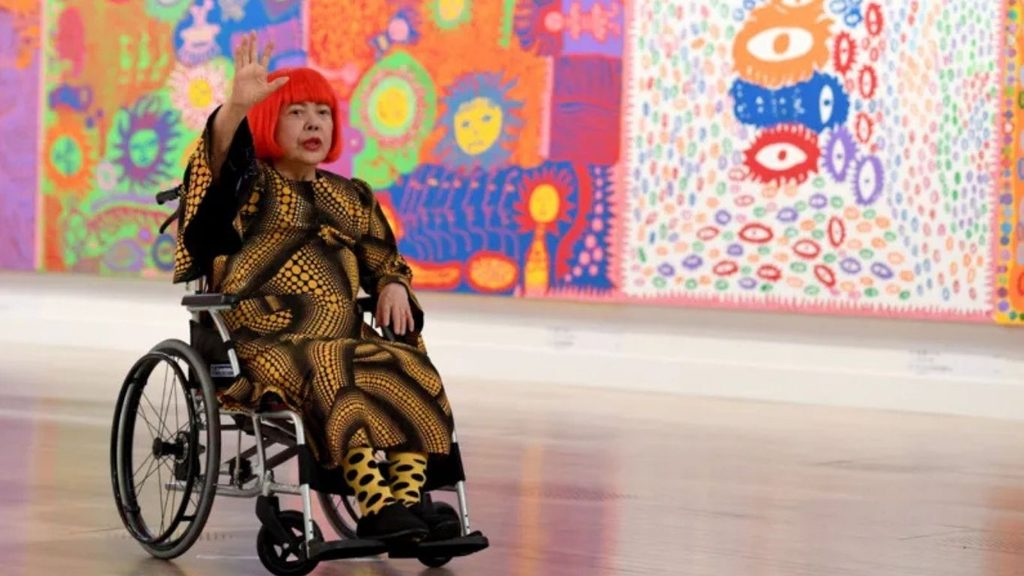
The Legacy of Yayoi Kusama
Perhaps Kusama’s greatest achievement lies in her ability to transform intensely personal experiences into a visual language that is at once intimate and universal.
Her dots speak of human smallness, yet they also evoke infinity. Her mirrors confront viewers with their own reflections. Her repetitive patterns dissolve the boundaries of individual identity and lead the viewer toward a larger sense of existence. Her pumpkins transform childhood memory into a powerful symbol of contemporary art.
In Kusama’s work, therefore, the personal and the cosmic, the psychological and the visual, the finite and the infinite coexist.
Even beyond the age of ninety, her practice remains an active force within contemporary art. Through a long life marked by personal struggles, persistence and an unwavering commitment to creation, she has demonstrated how individual experience can become a source of profound artistic expression when translated into a language capable of resonating with others.
Yayoi Kusama’s dots, ultimately, are more than dots. Each seems to lead toward another, and then another, forming an endlessly expanding visual landscape. Within that landscape, the human being may appear small, but the possibilities of imagination remain infinite.
And it is toward that infinity that Kusama’s art continues to invite us to look.