
written by: News Desk
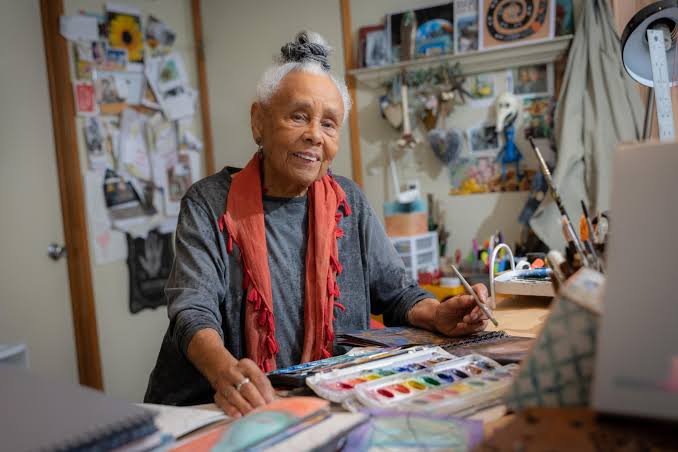
An old window frame, a cracked mirror, a wooden box, a worn-out doll, a handful of buttons, or pieces of used fabric—most people would consider these objects disposable. But in the hands of artist Betye Saar, they become powerful symbols of history, memory, resistance, and identity. Her work reminds us that objects are never merely objects; they carry within them the traces of lives lived, cultures shaped, and histories remembered.
American artist Betye Saar (1926–2026) was one of the pioneers of contemporary assemblage art. Across a remarkable century-long life, she developed a visual language in which art, politics, history, memory, and personal experience became inseparable. Her work consistently explored the histories of African Americans, racial injustice, womanhood, spirituality, and cultural identity, transforming everyday materials into deeply meaningful works of art.
When Objects Become Witnesses to History
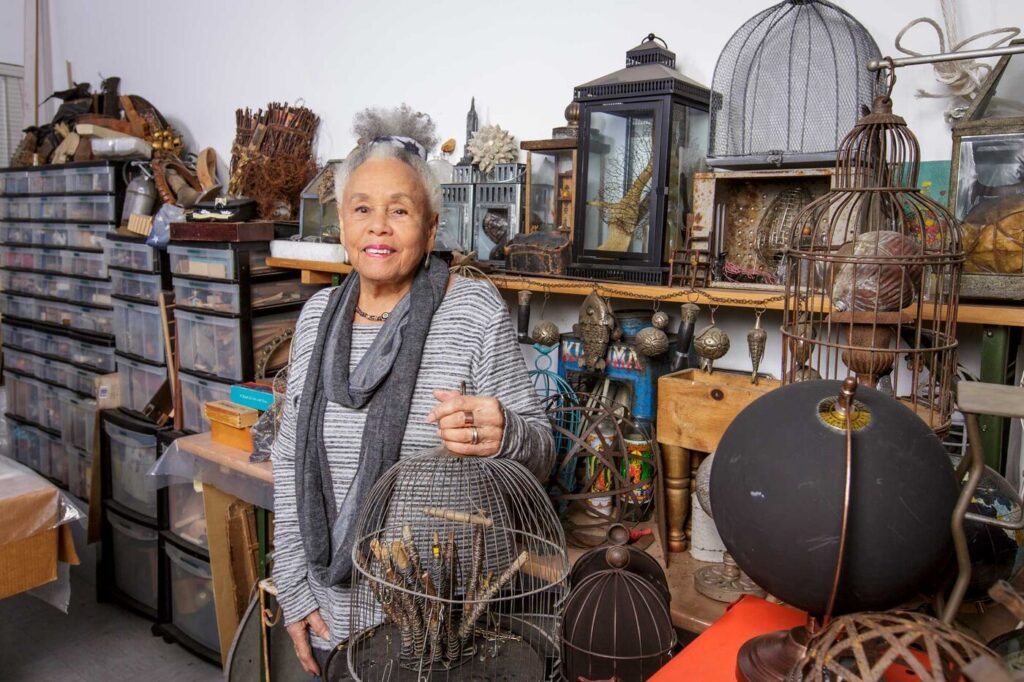
Saar believed that every used object possesses its own memory. For this reason, she was drawn not to new materials but to things that had already lived a life. She searched flea markets, antique stores, and second-hand shops for dolls, wooden boxes, window frames, clocks, religious icons, and discarded household items. Through assemblage—the creation of three-dimensional artworks from found objects—she gave these forgotten materials new meanings.
For Saar, art was never simply about aesthetics. It was a way of reinterpreting history. A broken mirror or an abandoned toy could become a document of cultural memory and human experience.
Turning a Stereotype into a Symbol of Liberation
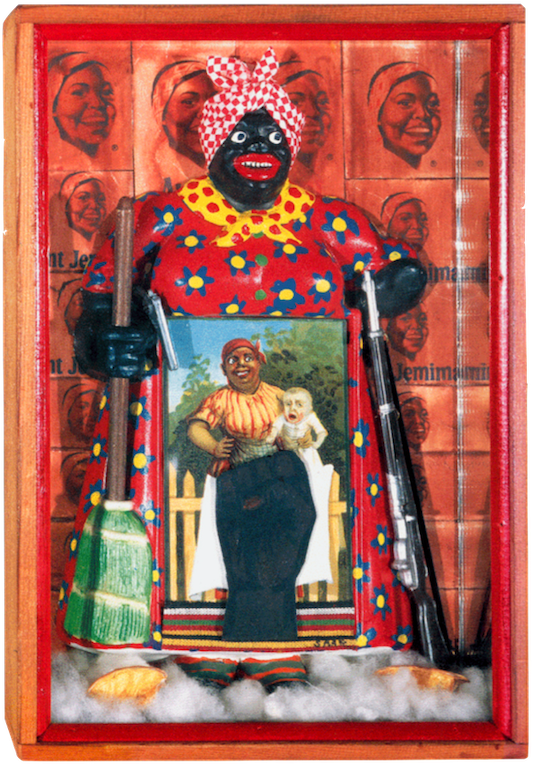
Among Saar’s most celebrated works is The Liberation of Aunt Jemima (1972). For decades, “Aunt Jemima” had been a racist stereotype in American popular culture, portraying Black women as obedient domestic servants.
Saar radically transformed this familiar image. In her assemblage, Aunt Jemima holds a broom in one hand and a rifle in the other. Images associated with the Black liberation movement surround her, replacing submission with defiance. A figure once created to reinforce racial prejudice is reimagined as a symbol of dignity, resistance, and empowerment.
Art historians regard the work as a landmark in both African American art and Black feminist art, establishing Saar as one of the most influential voices in contemporary American art.
A Window into the Inner Self
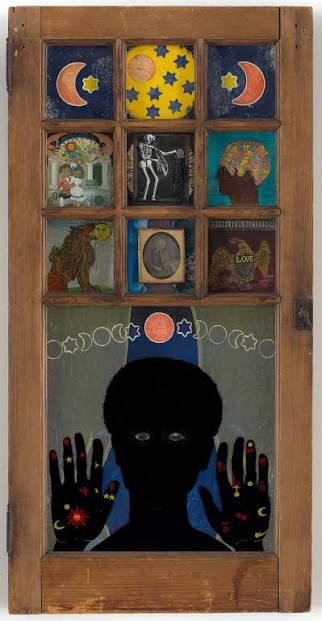
Created in 1969, Black Girl’s Window is one of Saar’s most poetic and introspective works. Built within an old wooden window frame, the piece presents a young Black female figure surrounded by stars, moons, palmistry symbols, astrological signs, and mystical imagery.
Rather than looking outward, the window invites viewers inward—toward identity, memory, and spiritual reflection. It becomes less a physical window than a metaphorical passage into the self.
The work reflects Saar’s lifelong fascination with ancestry, mysticism, and the invisible dimensions of human existence.
Memory, Spirituality, and Cultural Heritage
Religious and spiritual symbols appear throughout Saar’s work. She freely combined African traditions, Christian imagery, astrology, folklore, and family memories to create layered visual narratives.
Her spirituality was never confined to a single faith. Instead, it represented a broader search for ancestry, cultural inheritance, and collective memory.
Saar believed that identity is shaped not only by the present but also by the generations that came before us. This conviction made family history and ancestral memory recurring themes throughout her artistic career.
Giving Discarded Objects a Second Life
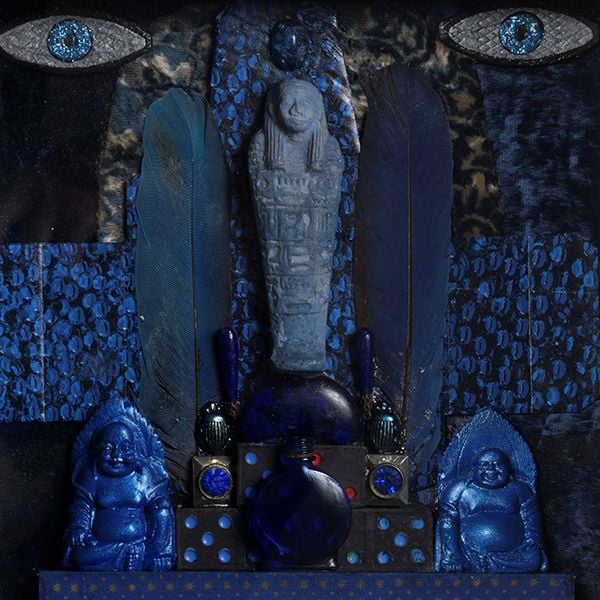
One of Saar’s greatest artistic achievements lies in her treatment of materials. She never attempted to erase an object’s previous life. Instead, she embraced its scratches, stains, cracks, and signs of age, allowing time itself to become part of the artwork.
A weathered wooden box could evoke generations of family history. A broken clock could symbolize lost time, memory, or forgotten lives. Through this transformation, ordinary objects acquired extraordinary emotional and historical significance.
Today, as conversations about sustainability and recycled materials become increasingly central to contemporary art, Saar’s practice appears remarkably forward-looking. Long before environmental consciousness became a global concern, she demonstrated how discarded materials could be reborn through artistic imagination.
From the Personal to the Political
Although Saar rarely employed overt political slogans, her work is profoundly political. She understood that personal memories are inseparable from broader histories of race, gender, and power.
Themes such as slavery, civil rights, racial discrimination, and the experiences of Black women emerge throughout her work—not as direct statements, but through symbols, metaphors, and carefully assembled objects.
Rather than offering simple answers, Saar challenges viewers to confront uncomfortable questions about history and society.
An Inspiration for Future Generations
Betye Saar’s influence extends far beyond assemblage art. She has inspired generations of artists—particularly women, African Americans, and other historically marginalized communities—to embrace their own histories as legitimate subjects for artistic expression.
Her legacy can be seen across installation art, mixed media, conceptual practices, and contemporary visual culture. She demonstrated that art rooted in personal experience can also speak to universal human concerns.
Rethinking the Purpose of Art
Saar’s work ultimately asks a fundamental question: Is art merely about creating beauty, or can it become a means of rewriting history?
Throughout her career, she chose the latter. For Saar, art was an act of remembering, reclaiming identity, and quietly resisting systems of oppression.
Over the course of a century, she proved that the true power of art lies not simply in color or composition, but in vision. What others dismiss as worthless can become, in the hands of an artist, a profound historical document.
Today, her works are housed in many of the world’s leading museums and collections. Yet perhaps her greatest legacy is the lesson she leaves behind: artists do not always need new materials to create something meaningful—they need only a new way of seeing.
In the end, Betye Saar’s art is not merely about discarded objects. It is about memory, resilience, dignity, and the enduring human capacity to transform pain into creativity. Every assemblage she created reminds us that history never truly disappears; it simply finds new forms through which to speak.