
written by: News Desk
Nine eminent painter-printmakers explore the space where printmaking and painting converge
The first impression is immediate. It arrives before thought—an instinctive response to an image, a colour, a line.
The second impression is different. It comes later, after the image has settled in the mind. It belongs to reflection, memory and discovery—often revealing something that the first glance could not.
It is this space between the immediate and the reflective that Second Impression, a new exhibition presented by Bengal Foundation, seeks to explore. Bringing together nine eminent painter-printmakers from different generations of Bangladesh’s art scene, the exhibition examines how the discipline of printmaking continues to shape the language of painting.
Featuring Monirul Islam, Abul Barq Alvi, Shahid Kabir, Mahmudul Haque, Kalidas Karmakar, Rokeya Sultana, Anisuzzaman Anis, Farzana Ahmed Urmi and Abdullah Al Bashir, the exhibition creates a dialogue across generations and artistic practices.
The participating artists represent a journey that stretches from pioneers who emerged in the 1970s to artists whose voices became prominent in the 2000s. Although their practices have evolved across different media, they share a common foundation: the disciplined visual language of the matrix, plate and stone.
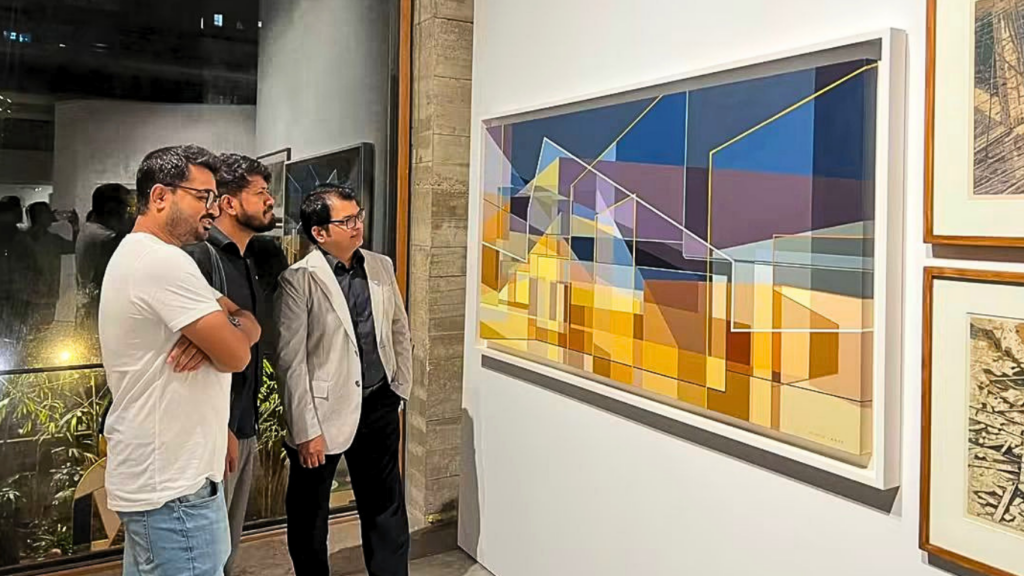
Printmaking and painting may appear to operate through different processes. Painting often embraces the immediacy of gesture, while printmaking requires patience, repetition and an acceptance of the indirect. But when a printmaker turns to the canvas, these disciplines do not necessarily separate. The structural precision of an engraved line can return as a painterly gesture. The patient layering demanded by printmaking can transform into atmosphere. The logic of the matrix can reappear as an architectural structure within a painting.
In this sense, painting becomes another stage in the same visual investigation.
Second Impression challenges the idea that printmaking and painting should be understood as separate artistic identities. Instead, it presents them as interconnected expressions of a single creative consciousness.
One of the most compelling aspects of printmaking is its relationship with repetition. Unlike the traditional notion of a singular, irreplaceable painting, printmaking embraces processes that allow an image to exist through multiple impressions. That logic also opens up another way of thinking about the artist’s studio. The artwork is no longer necessarily a final destination. It can become part of an ongoing system of experimentation—where lines, surfaces, textures and forms are continuously reconsidered.
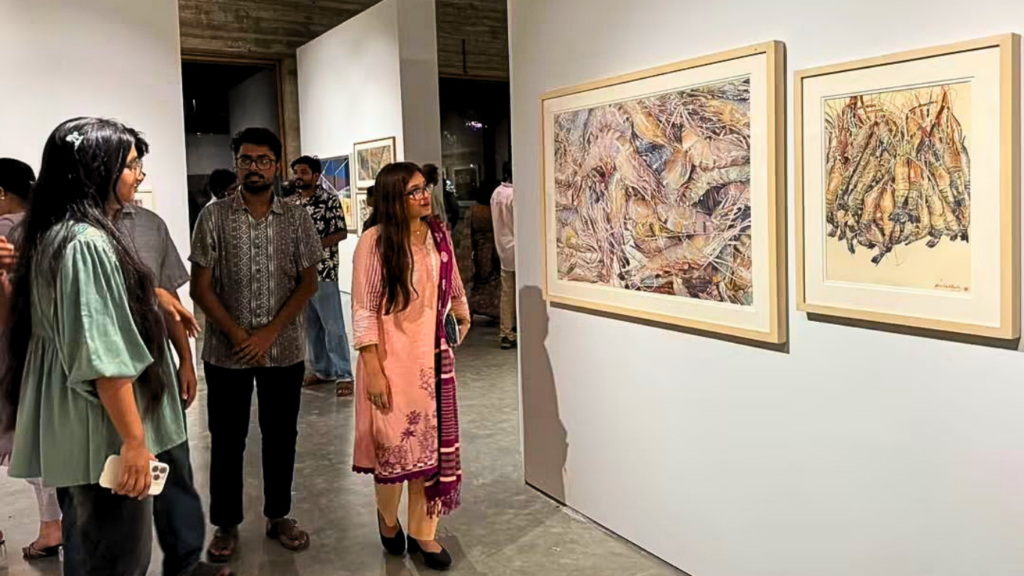
By bringing paintings and prints into the same exhibition, Second Impression makes this process visible. To see only the prints would be to encounter one part of the artistic sentence; to see only the paintings would be to encounter another.
Together, they reveal the complete thought.
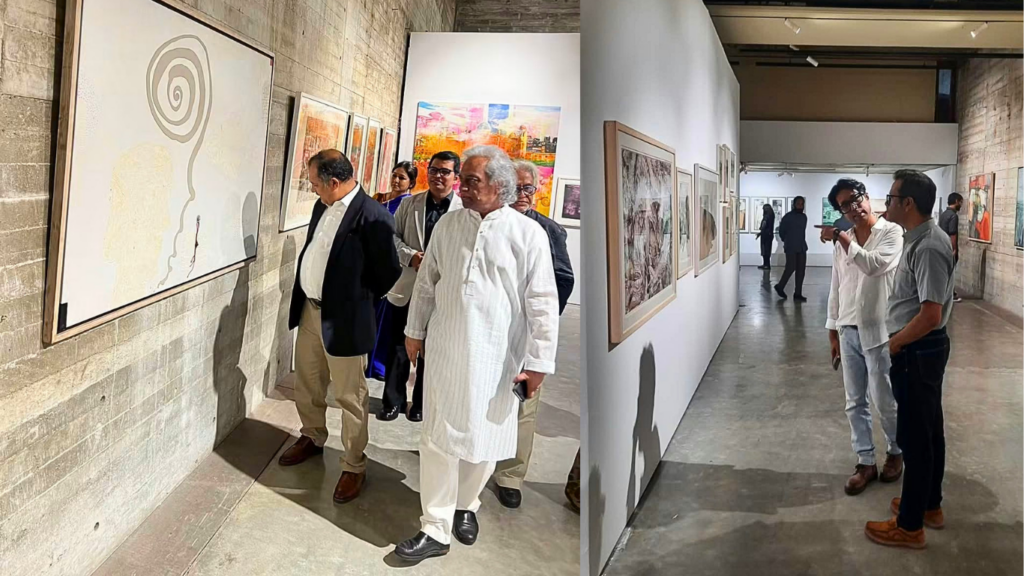
The exhibition is also significant for the way it brings together artists from different generations. Rather than presenting a single artistic vocabulary, the show creates a heterogeneous field of individual voices. Each artist approaches the relationship between printmaking and painting through a distinct visual language, shaped by personal experience, formal experimentation and evolving artistic concerns.
This diversity resists the idea of an “exclusive vision” of Bangladeshi art. Instead, it proposes a broader understanding—one in which different practices, generations and sensibilities can coexist and speak to one another.
At a time when the contemporary art market often gravitates towards singular, immediately recognisable paintings, Second Impression offers a timely reconsideration of printmaking. The exhibition refuses to position printmaking as a secondary or peripheral practice. Instead, it places the medium alongside painting as an equally significant foundation of artistic exploration. The result is not simply an exhibition of prints and paintings. It is an invitation to reconsider how an image is made, repeated, transformed and remembered.
Perhaps that is the true meaning of the second impression. The first encounter tells us what we see.
The second asks us to look again.
And somewhere between those two moments, ink becomes memory, paint becomes persistence, and nine distinct artistic voices begin a conversation that extends far beyond the gallery wall.
Exhibition Details
Second Impression: The Memory of Ink, the Persistence of Paint
Presented by: Bengal Foundation
Venue: Quamrul Hassan Exhibition Hall, Level 1, Bengal Shilpalay
Address: House 42, Road 27 (New 16), Dhanmondi, Dhaka 1209
On view until: Saturday, 3 October 2026
Viewing hours: Every day, 4 PM–8 PM