
written by: Bappy Linkon Roy
Novera Ahmed is an extraordinary and courageous name in the history of modern sculpture in Bangladesh. She was not merely a sculptor; she was an artist who introduced a new language by blending sculpture, architectural thinking, and modern artistic concepts. In her creations, emotions, existence, relationships, nature, and the inner world of human beings became more significant than physical forms. Her art reflects a profound reading of time, society, and the human psyche.
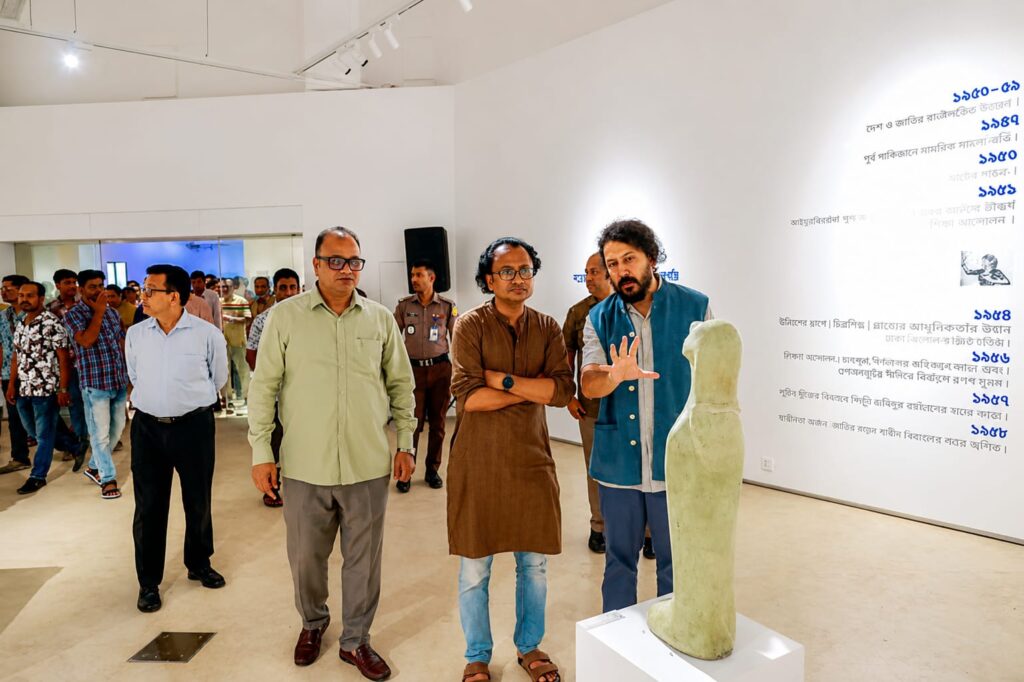
To present the life and creative journey of this pioneering figure of modern sculpture in Bangladesh to a new generation of audiences, a special exhibition titled “Novera” was organized at the Bangladesh National Museum. The exhibition, held at the Nalinikanta Bhattashali Gallery, concluded on July 21. It featured Novera Ahmed’s remarkable sculptures, paintings, photographs, exhibition catalogues, and various personal belongings and memorabilia associated with her life.
Upon entering the gallery, it became evident that this was not merely an exhibition of artworks; rather, it was a comprehensive presentation of an artist’s life, philosophy, era, and creative journey. The exhibition guided visitors through Novera’s artistic world, where personal experiences, social realities, and international modernism engaged in a profound dialogue with her distinctive artistic language.
Novera: An Artist Who Transcended the Boundaries Between Architecture and Sculpture
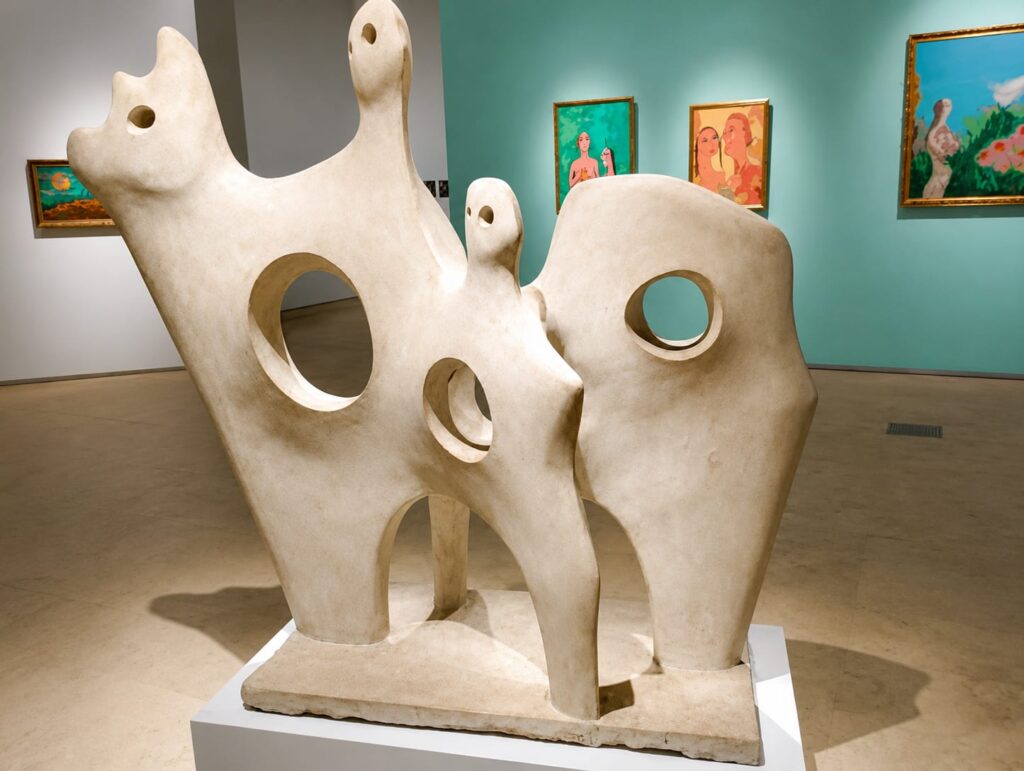
One of the defining characteristics of Novera Ahmed’s artistic practice was her deep attention to space, balance, and structure—qualities closely associated with architectural thinking. Although she is primarily recognized as a sculptor, architectural influences were clearly visible in her artistic vision. The way she explored form, negative space, light and shadow, and the relationship between materials reflected the perspective of an architect.
Born in 1930, Novera Ahmed was among the first generation of modern sculptors of the subcontinent. She studied sculpture at the Camberwell School of Arts in London. After becoming familiar with European modern art, she moved beyond conventional realistic sculpture and began exploring abstraction, simplification, and new possibilities of form.
Although human figures appear in her works, they never remained mere representations of physical bodies. Instead, the human form became a symbol of emotion, relationships, and existence. Through the curve of a sculpture, an empty space, or an incomplete line, she created expressions filled with profound meaning.
An Artistic Language Shaped by History and Social Experiences
Novera’s artistic vision developed through a period of significant social transformation. The trauma of Partition, the struggles of displaced people, the spirit of the Language Movement, and political instability deeply influenced her artistic thinking. Therefore, her works do not merely seek beauty; they also contain memories of history and questions about human existence.
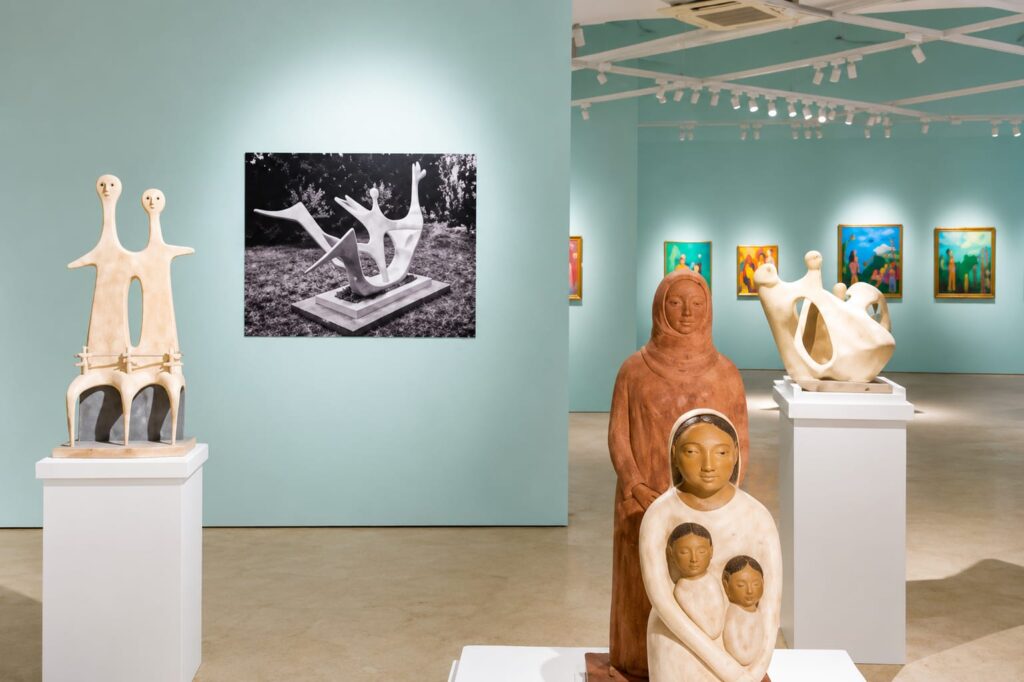
Looking at the sculptures displayed in the exhibition, it becomes clear that her primary goal was not imitation of reality but the expression of emotions. Themes such as motherhood, human relationships, loneliness, struggle, and existential concerns emerged through various symbolic forms in her artworks.
The use of simple geometric forms, abstract structures, and carefully designed negative spaces gave her sculptures a distinctive identity. She understood that the beauty of a sculpture lies not only in its visible elements but also in its relationship with the surrounding empty spaces. This philosophy connected her work with significant movements in modern art.
A New Language of Materials and Experimental Creativity
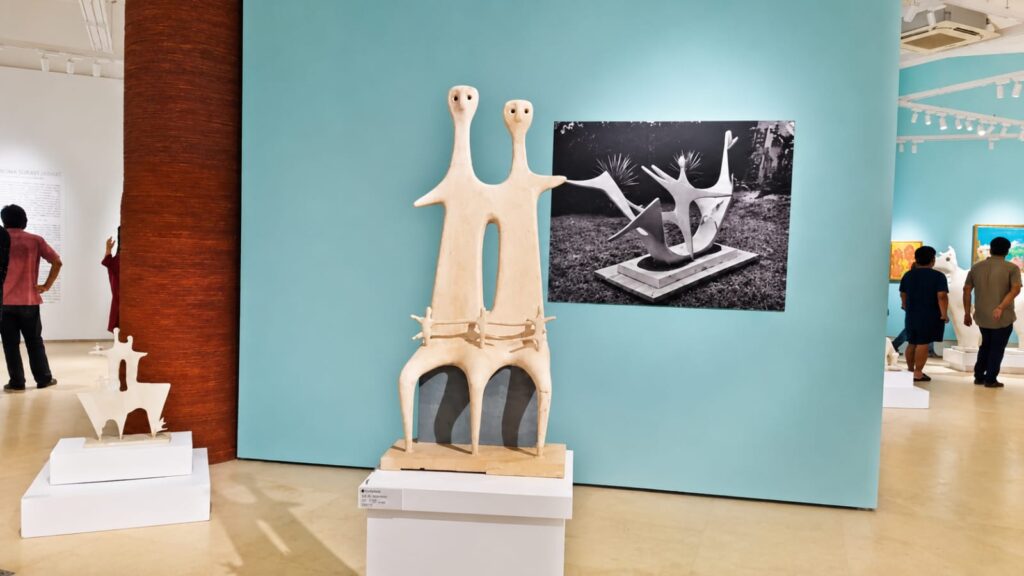
One of Novera Ahmed’s greatest contributions was her bold experimentation with artistic materials. Bronze, cement, stone, wood, and industrial metal elements were transformed into powerful artistic expressions in her hands. By moving beyond traditional concepts of sculpture and incorporating industrial materials, she created a new aesthetic of modernity.
Her sculpture made from the remains of a war-damaged aircraft carries a strong humanitarian statement against war. She transformed elements of destruction into symbols of creation. Through this approach, her art established a unique relationship between destruction and construction, machinery and humanity, reality and imagination.
A Fusion of Bengali Roots and International Modernism
Novera’s art reflects both the influence of European modern art movements and the deep impressions of Bengali folk traditions, rural life, and cultural memories. She did not simply imitate Western modernism; rather, she developed her own artistic language by blending modern ideas with her cultural roots and personal experiences.
Her works carry the presence of earth, people, nature, and time. Whether through simplified human forms, abstract interpretations of nature, or symbolic representations of relationships, her art became an architecture of emotion.
A Distinctive World in Painting
Novera Ahmed was not limited to sculpture; she also created a unique artistic world through painting. Her colorful paintings reveal a dreamlike presence of people, nature, and memories. Works such as “Conversation” and “Unexpected Encounter,” created with acrylic colors, transform everyday moments into poetic visual experiences.
For Novera, color was not merely an element of visual beauty; it was another medium for expressing emotions. Just as form speaks through her sculptures, color becomes the language of feelings in her paintings.
The Independent Expression of a Woman Artist
Novera Ahmed’s life was as unconventional as her art. At a time when women’s roles in society were often restricted by social expectations, she created a powerful example of independence through her lifestyle, clothing, ideas, and artistic practices.
She challenged traditional social structures, lived on her own terms, and developed an artistic identity that was entirely her own. The personal belongings displayed in the exhibition also reflected the spirit of this independent and fearless artist.
An Exhibition That Reintroduces Novera to New Audiences
The exhibition at the Bangladesh National Museum was not merely a tribute to an artist; it was an opportunity to revisit the history of modern art in Bangladesh from a fresh perspective. For students, artists, researchers, and art enthusiasts, the exhibition became an important platform for understanding Novera’s artistic philosophy.
Novera Ahmed’s art remains equally relevant today because her works teach people to see—not only through their eyes but also through their emotions. The silence of her sculptures raises questions, while the abstraction in her works inspires new ways of thinking.
For Novera, modernity was never just a particular artistic style; it was the courage to create one’s own identity. That courage, independence, and creative spirit continue to keep her art alive. Her artistic legacy proves that a true artist transcends the limitations of time and leaves behind a lasting presence—not merely through forms, but through emotions.