
written by: News Desk
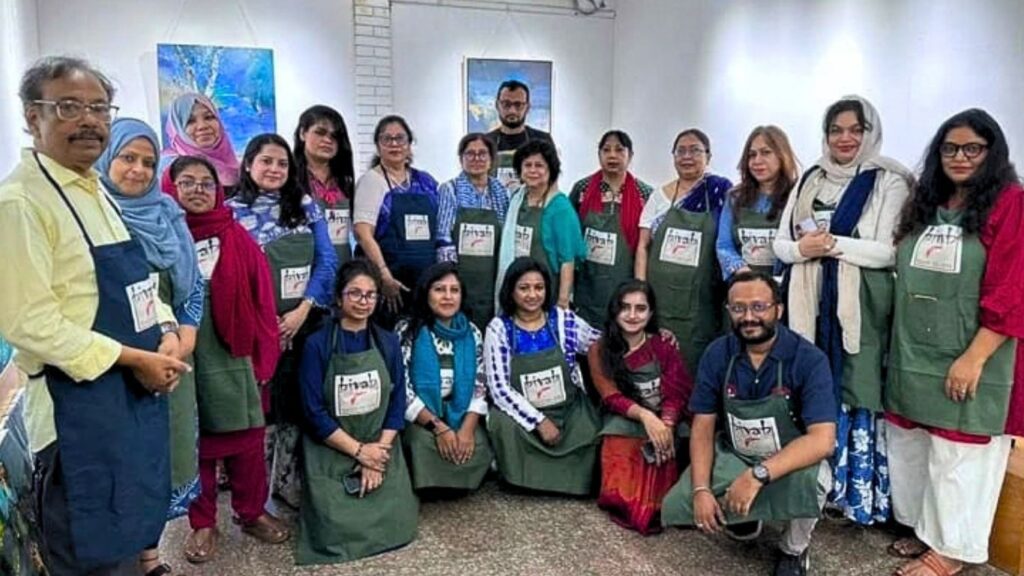
How many ways can a colour speak on a canvas? How can a subtle change in the layering, density, transparency or texture of the same colour transform the entire mood of a painting? Exploring these possibilities of colour and painting techniques, Bibhab, Forum for Arts organised a day-long workshop for artists.
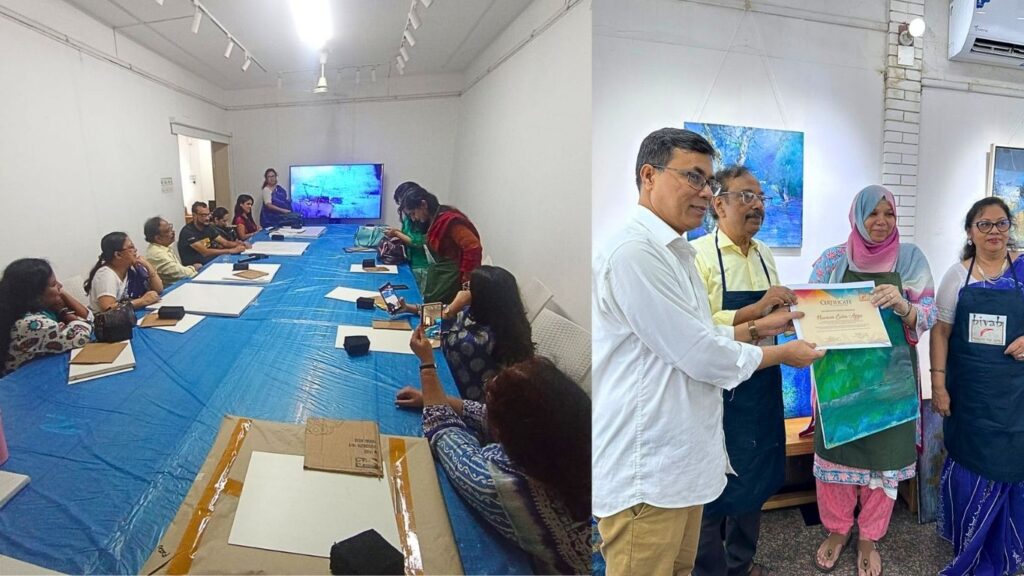
Led by acclaimed artist Rezwan Nabi, the workshop focused on the varied uses and techniques of acrylic painting. Held on Saturday, September 5, the workshop brought together 22 artists from diverse generations and artistic backgrounds. The day-long programme offered both a space for practical exploration of the medium and an opportunity for participants to exchange ideas and experiences.
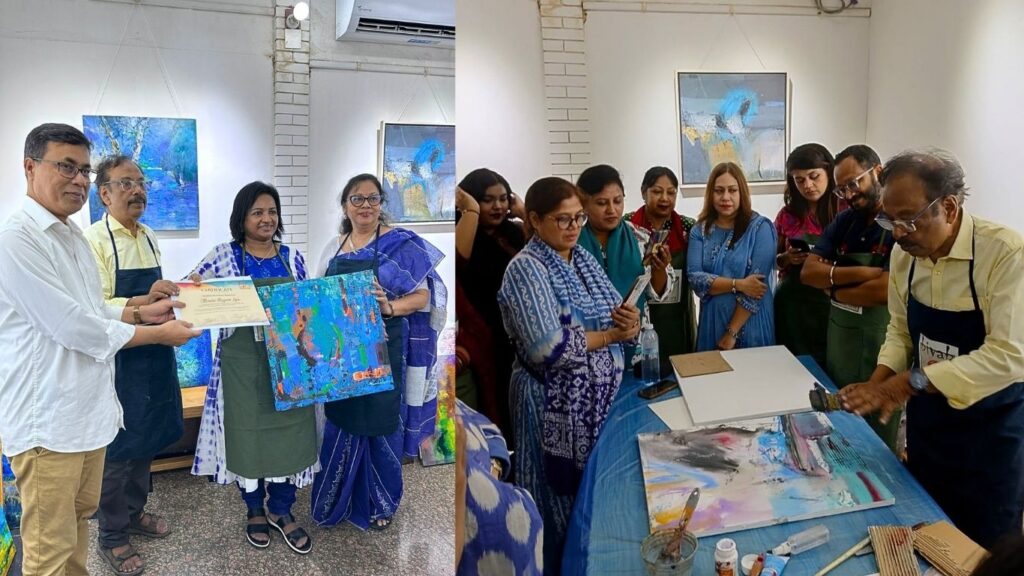
With its quick-drying quality, versatility in transparency and density, and adaptability to different approaches, acrylic has become an important medium in contemporary art practice. During the workshop, participants explored the possibilities of acrylic, techniques of colour application, and various practical aspects of constructing an artwork through the medium.
Acrylic holds a significant place in Rezwan Nabi’s artistic practice. His abstract acrylic and watercolour works have long been an important part of his distinctive visual language. The workshop, therefore, was not simply an exercise in learning the technical aspects of a particular medium; it also created an opportunity to explore how colour can become a vehicle for thought and expression.
Rezwan Nabi is a recognised name in contemporary Bangladeshi art. After completing his master’s degree from the Faculty of Fine Arts at the University of Dhaka, he pursued higher studies in art in the Netherlands. Alongside participating in numerous exhibitions in Bangladesh and abroad, he has held ten solo exhibitions to date.
He also took part in a month-long residency programme in Poland, where he engaged in research on painting. One of his artworks was selected for the permanent collection of the Asia and Pacific Museum in Warsaw, Poland, marking an important recognition of his international artistic practice.
Beyond painting, Rezwan Nabi has also created numerous illustrations and artworks for children’s books. His artistic practice therefore extends from an exploration of abstraction and colour to a more accessible and imaginative visual language.
The 22 artists who participated in the workshop are:
- Apurba Khandakar
- Munira Begum Lipi
- Manasi Banik
- Sadia Bani
- Anindita Dutta
- Mithila Farzana
- Shama Shaiyom
- Naima Akhtar
- Eliza Sultana Annie
- Umme Habiba Sumi
- Ribhu Roddur
- Gazi Sabnam
- Firoza Akhtar Siddiq
- Nazma Begum
- Nazmun Akhtar
- Shubhashree Gunjan
- A.B.M. Safiul Alam Sabbir
- Jannat Keya
- Afroza Aktari
- Jahan Afroz Ruba
- Roksana Samrajni
- Nowrin Zayna Azizi
Coming from diverse artistic experiences and practices, the participants found in the workshop an opportunity to learn and reflect together. Since each artist brings an individual perspective and approach to the same medium, such an initiative also enriches the exchange of ideas within the artistic community.
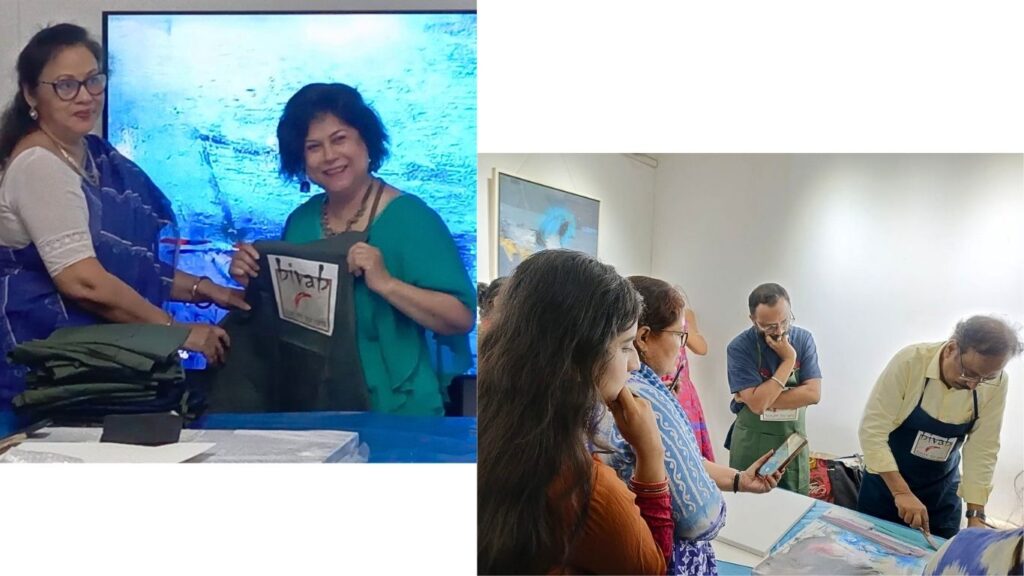
The value of an art workshop extends beyond learning a new technique. Such gatherings allow artists to reconsider their own practices, observe the approaches of others and discover new possibilities within familiar mediums.
Rezwan Nabi’s workshop created precisely such a space for exploration. From the technical application of acrylic colours to the process of transforming them into personal expression, the day-long programme encouraged participants to engage with the medium from new perspectives.
The use of colour is never merely a matter of technical skill; it is also a vehicle for an artist’s thoughts, emotions and individual visual language. By exploring layers, textures, light and shadow, and the relationships between colours, the artists had an opportunity to reconsider and expand the possibilities of their own practices.
At the end of the workshop, certificates were presented to the participants. Yet the true value of such a workshop perhaps lies beyond the certificate—in developing a renewed relationship with colour, gaining a deeper understanding of one’s artistic language, and discovering unfamiliar possibilities within a familiar medium.
Bibhab, Forum for Arts’ initiative was therefore more than a day-long workshop. It became a meaningful addition to the continuing journey of artistic practice—one rooted in learning, sharing and the constant search for new possibilities.