
written by: News Desk
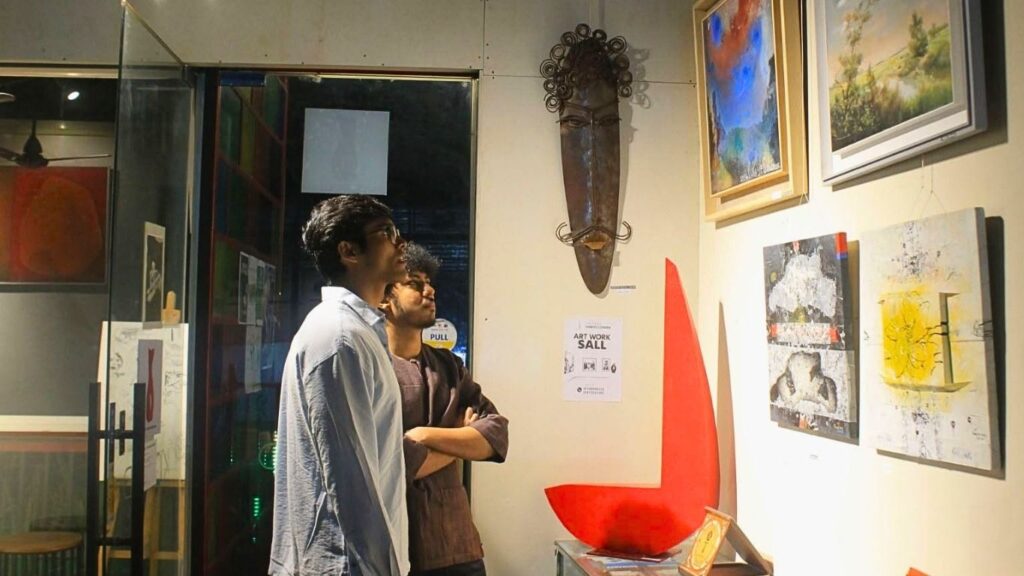
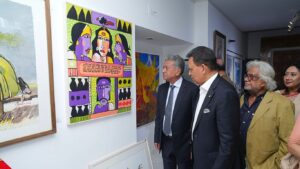
Bringing together 25 artists, Beyond Boundaries: One Continuing Legacy explores the intersections of artistic heritage, cultural identity and contemporary expression in Bangladesh. The exhibition continues until 1 November 2026.
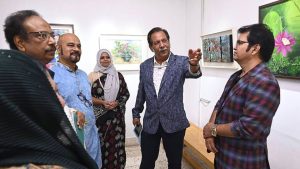
Bangladesh’s rich artistic heritage, evolving visual languages and creative connections across generations come together in Beyond Boundaries: One Continuing Legacy, a group exhibition at Gallery Hamiduzzaman in Gulshan 2, Dhaka.
Featuring works by 25 artists from different generations, the exhibition offers an opportunity to reflect on the continuities and transformations that have shaped Bangladesh’s modern and contemporary art. Through diverse artistic approaches, materials and individual perspectives, it presents a dialogue between established traditions and evolving forms of expression.
The participating artists include Bipasha Hayat, Rafiqun Nabi, Kanak Chanpa Chakma, Farida Zaman, Rokeya Sultana, Monirul Islam, Ivy Zaman, Kuhu Plamondon, Shamim Subrana, Afroza Jamil Konka, Mustafa Monwar, Abdus Sattar, Abdus Shakoor Shah, Abdul Mannan, Biren Som, Ranjit Das, Anisuzzaman Anis, Saiful Islam, Kazi Shahid, Shahanur Mamun, Kamal Uddin, Kawsar Hasan Togor, Shawkatuzzaman and Dipra Banik, among others.
Opened on 1 October, the exhibition will continue until 1 November 2026, with support from VIP Motors.
Artistic expression rarely remains confined to a particular medium, style or generation. As artists respond to changing social realities, personal experiences and cultural identities, their visual languages evolve, creating new possibilities for interpretation.
Beyond Boundaries draws attention to this process of transformation. Rather than presenting artistic heritage as a fixed tradition, the exhibition approaches it as a continuing conversation shaped by individual practices and collective cultural memory.
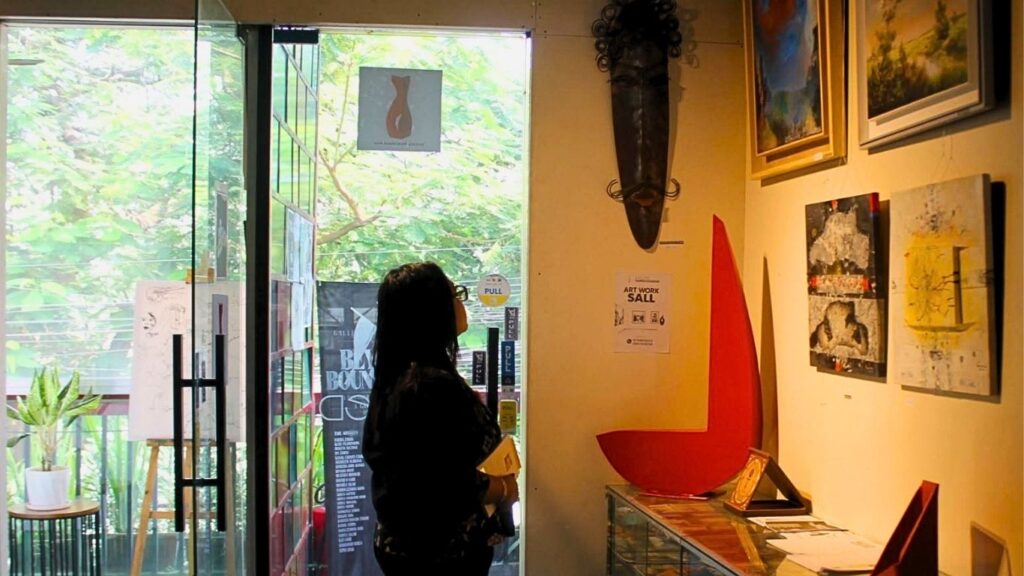
One of its defining aspects is the coexistence of artists from different generations. Their distinct approaches to subject matter, composition, technique and material create a broader picture of Bangladesh’s artistic landscape.
Within this diversity, the exhibition suggests that artistic continuity does not necessarily depend on stylistic similarity. Instead, it emerges through shared histories, overlapping concerns and the ongoing reinterpretation of cultural experience.
Among the participating artists, Bipasha Hayat has developed a visual practice that engages with memory, identity and the subconscious. Trained at the Faculty of Fine Arts, University of Dhaka, she has established a personal language of expression through painting.
Rafiqun Nabi, a significant figure in Bangladesh’s modern art, is widely recognised for his engagement with social realities, satire and human experience. His celebrated cartoon character Tokai has become an enduring symbol of poverty, inequality and the struggles of marginalised communities. His contributions across painting, printmaking and cartooning remain an important part of the country’s artistic history.
Questions of cultural identity and lived experience also find distinct expressions in the practices of Kanak Chanpa Chakma and Farida Zaman.
Kanak Chanpa Chakma’s paintings frequently draw on Indigenous cultural traditions, women’s experiences and the everyday life of the Chittagong Hill Tracts. Farida Zaman, meanwhile, explores the landscapes, rural environments and folk traditions of Bangladesh, bringing familiar cultural imagery into her artistic compositions.
Rokeya Sultana’s paintings and prints examine experiences of womanhood, identity and human existence. Her practice has contributed significantly to the development of contemporary printmaking and feminist perspectives in Bangladeshi art.
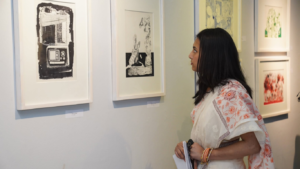
Bangladeshi-Spanish artist Monirul Islam is known for his experimental approach to etching, delicate linear compositions and sophisticated explorations of form and space. His work reflects a sustained engagement with the expressive possibilities of printmaking.
Sculptor Ivy Zaman’s practice, by contrast, explores geometric structures, volume and spatial relationships, reflecting a modernist investigation of sculptural form.
These individual approaches reveal the diversity of artistic concerns within the exhibition. While some artists draw inspiration from cultural memory and social observation, others pursue formal experimentation, abstraction or personal narratives.
The exhibition’s title, Beyond Boundaries: One Continuing Legacy, points towards a broader understanding of artistic inheritance.
Here, legacy is not simply the preservation of established forms or ideas. It is also the process through which artists reinterpret inherited traditions, question familiar visual conventions and develop new responses to their own time.
The presence of artists working across different generations reinforces this perspective. Their practices reflect the changing relationship between art, society and individual experience, while remaining connected to the larger history of artistic development in Bangladesh.
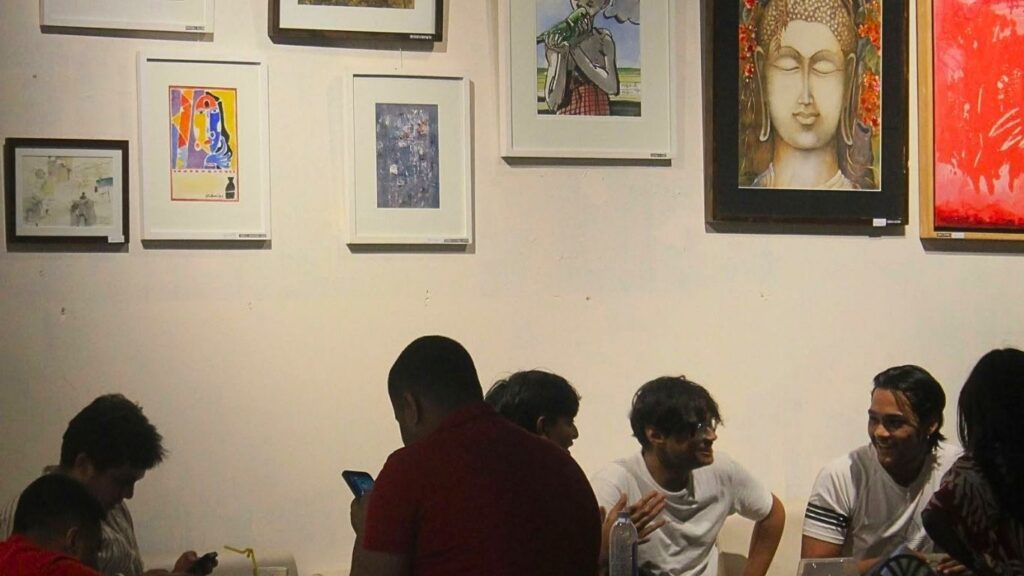
The exhibition also gains a particular resonance from its setting at Gallery Hamiduzzaman, a space bearing the name of one of the country’s prominent sculptors. In this context, the gallery becomes more than a venue; it provides a setting for considering how artistic contributions are remembered, revisited and carried forward.
What emerges is not a single narrative of Bangladeshi art, but a collection of distinct artistic positions that together suggest a continuing process of cultural exchange and transformation.
Bangladesh’s art history has never been a static progression of movements or styles. It has evolved through experimentation, changing social circumstances and the individual pursuits of artists working within different historical and cultural contexts.
Beyond Boundaries brings these relationships into focus by placing diverse artistic practices within a shared exhibition space.
Its significance lies not only in the gathering of 25 artists but also in the opportunity it creates to consider how artistic identities develop across time—and how the past continues to inform contemporary visual expression.
For viewers, the exhibition offers a broader perspective on Bangladesh’s artistic heritage, where established voices and evolving practices contribute to an ongoing cultural conversation.
Ultimately, Beyond Boundaries: One Continuing Legacy presents artistic heritage not as something confined to the past, but as a living process—one that continues to evolve through dialogue, experimentation and the creative imagination of successive generations.