
written by: Rezaur Rahman
“To forget how to dig the earth and to tend the soil is to forget ourselves.”
— Mahatma Gandhi
Soil is the lifeblood of the Earth and the foundation of existence. It is through soil that life finds nourishment, continuity, and expression. Scientifically, soil is the soft upper layer of the Earth’s surface composed of minerals, organic matter, water, and air. Yet not every part of the planet is covered by fertile soil—some regions are vast stretches of sand, while others are barren expanses of rock. Nevertheless, it is only through soil that life sustains itself.
Looking back at the earliest civilizations, humanity’s first struggle was for survival, which gradually evolved into a struggle to protect the land. But what exactly was that struggle about? It was not merely a conflict over territorial dominance; it was also a fight against the degradation of the land itself. In the pursuit of modern civilization, humanity seems to have forgotten that the soil is another form of motherhood—a silent nurturer that has always sustained life.
“From the soil I learned patience;
From the stone I learned steadfastness.”
— Sunirmal Basu
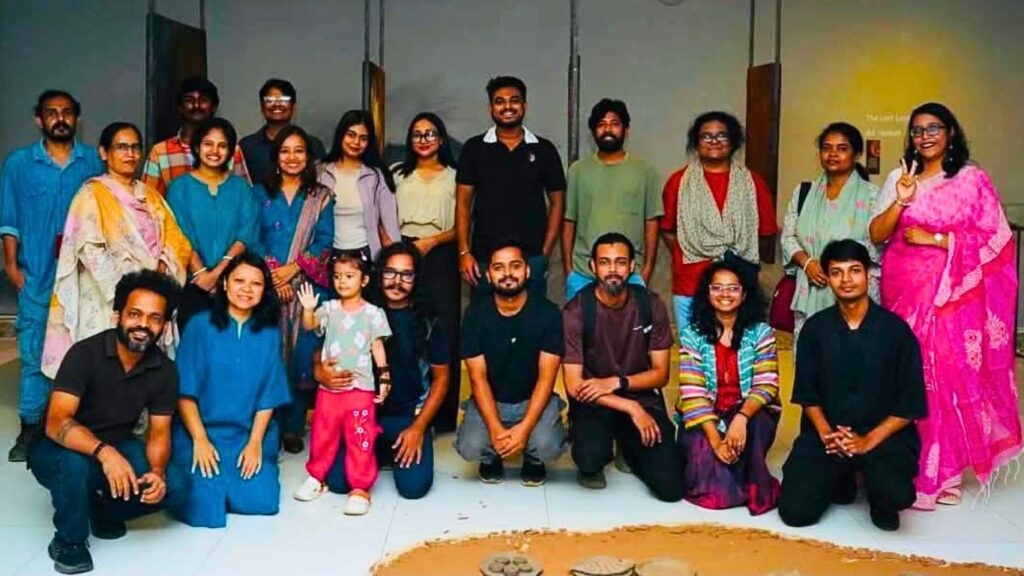
A group of young artists has gathered around this very idea of the soil—not simply to acknowledge their responsibility toward it, but to express that responsibility through art. Amid towering structures of brick and concrete, they seek to remind society that soil is the essence of our existence. Their search for the meaning of the earth does not rely on conventional visual language; instead, whether approached through realism or surrealism, their ideas emerge through the medium of installation art.
The exhibition, titled “In Search of the Earth”, presents works by a collective of emerging artists united by a common purpose: the preservation of existence itself.
In the earliest stages of human civilization, there was neither luxury nor decadence—only an endless pursuit of survival and progress. Primitive cave dwellers created images out of belief rather than aesthetic ambition, believing that these images would ensure successful hunts and sustenance. Art was secondary; what mattered was necessity, not technique, style, or color.
As civilization advanced, however, art gradually evolved into a refined aesthetic practice. Technical mastery became increasingly important, often overshadowing the urgency that once defined artistic creation. Installation art, recognized today as a three-dimensional artistic practice, engages not only sight but also touch, sound, and spatial experience. Yet the question remains: is installation art inherently realistic, or does it belong to the realm of surrealism?
According to André Breton, surrealist artists rely heavily on symbols—symbols that emerge from the collective unconscious. Seen from this perspective, symbolism becomes the defining characteristic of surrealist practice, and installation art naturally embraces this symbolic language.
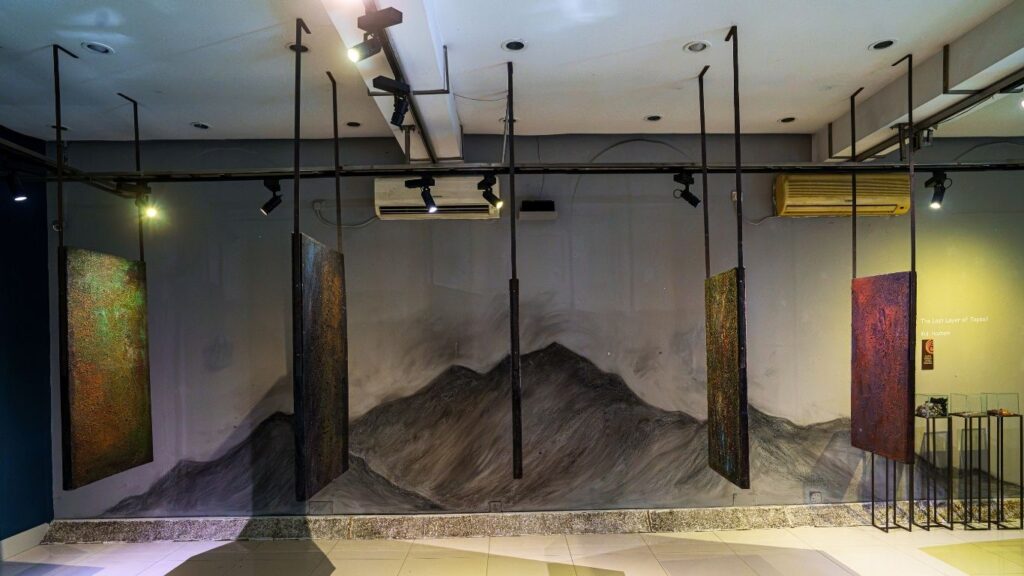
Artist Hasem, in his installation “The Last Layer of Top Soil,” presents a visually compelling interpretation of this idea. The work reflects his personal experiences, surroundings, and worldview. The gallery wall resembles a mountainous landscape, while newly emerging vegetation and a canvas covered in the colors of eroded soil symbolize both birth and decay. The symbolic elements are thoughtfully composed, though the extent to which the chosen materials reinforce the conceptual foundation invites further reflection.
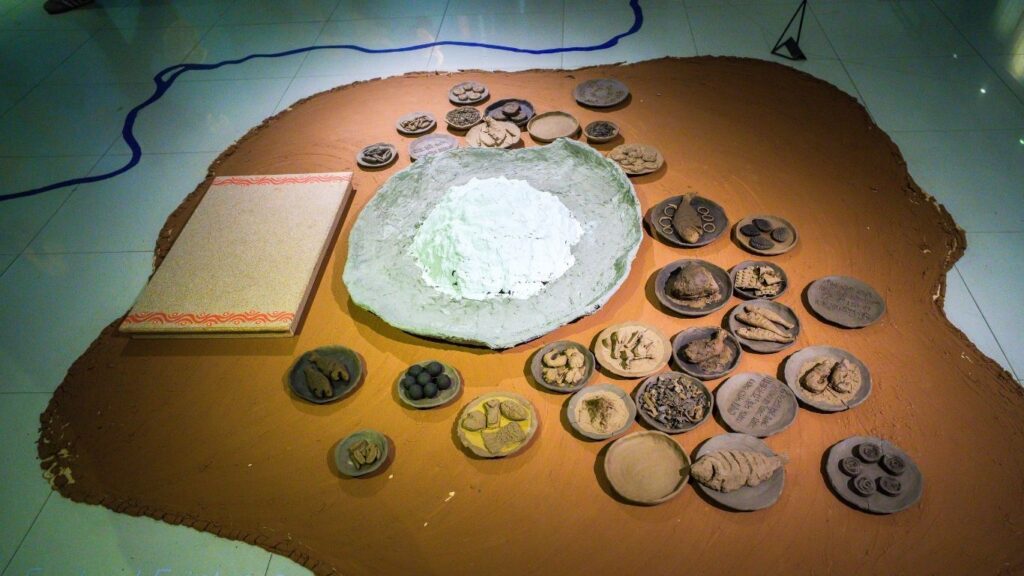
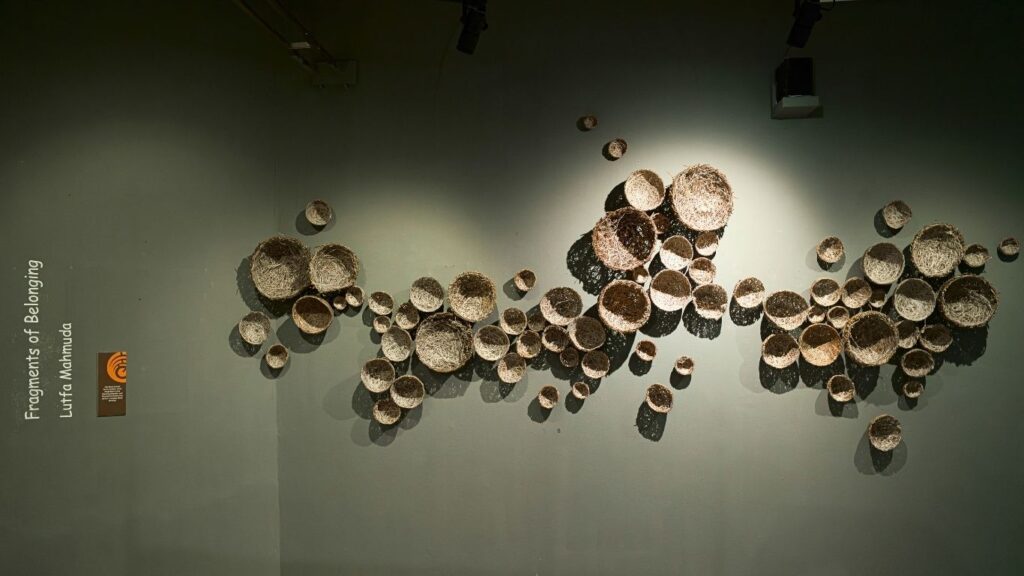
Artist Banani, through her installation “Food and Existence,” draws upon Bengali cultural traditions to create a meaningful artistic statement. Using soil as a metaphor, she successfully illustrates that all food originates from the earth and that soil remains the fundamental source of human survival. The work eloquently links nourishment with existence.
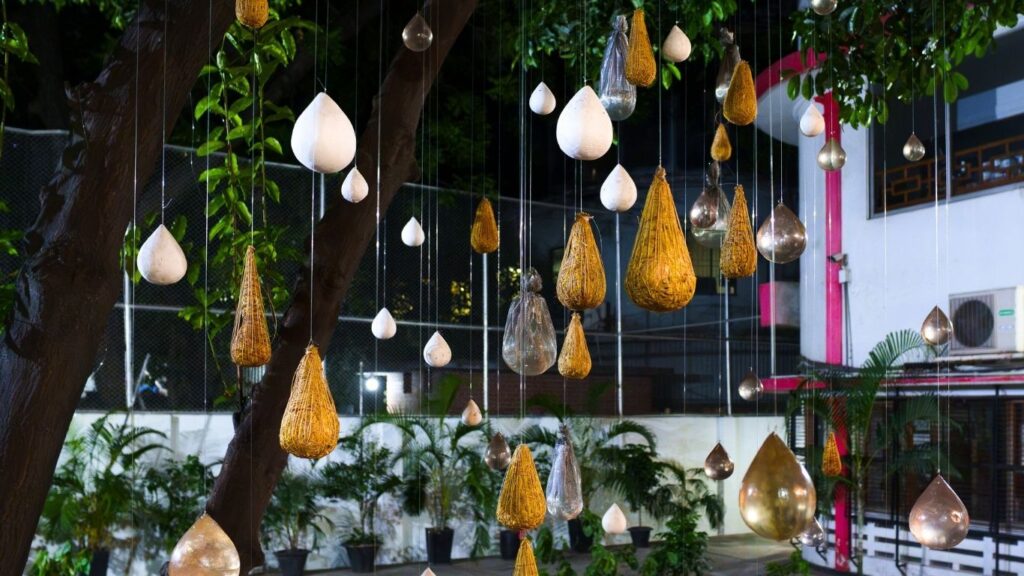
Similarly, artist Faizul, in “Rain in the Eco,” explores the dual role of rain as both a life-giving force and an agent of soil erosion. Installed in an open environment, the work employs diverse materials to evoke the image of falling raindrops, creating a poetic atmosphere. However, the physical presence of soil itself appears comparatively limited. Since installation art depends greatly on the harmony between material and concept, a stronger integration of the earth as a material could have further strengthened the work.
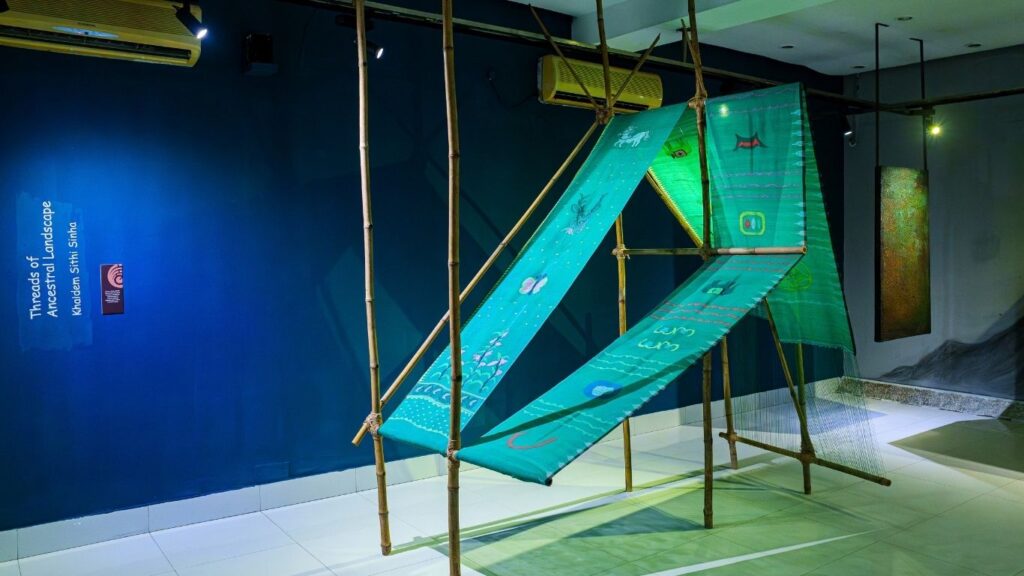
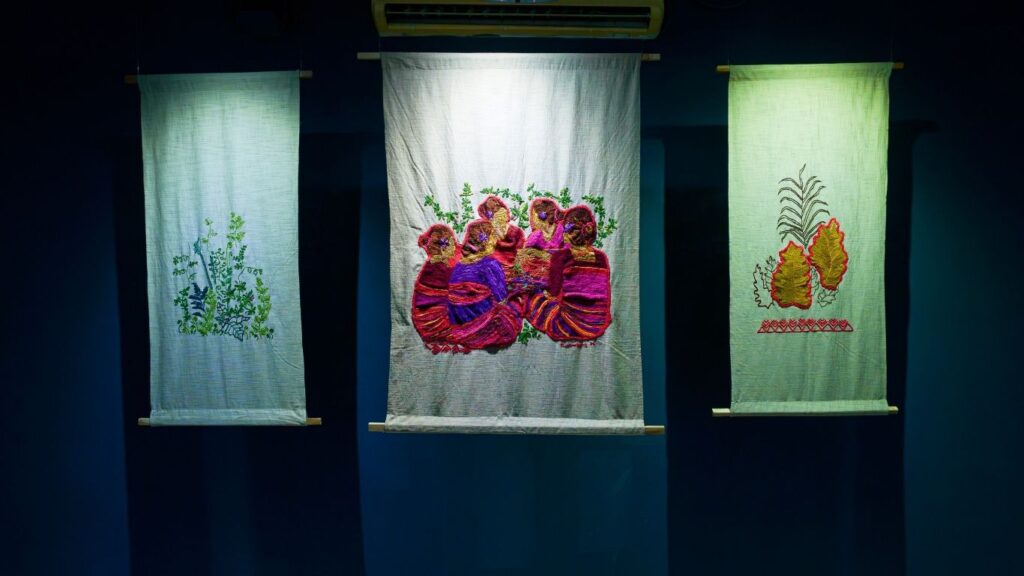
The exhibition also features artists from diverse cultural backgrounds. Artists Sinthi and Rupshree Hajong come from communities whose lives remain deeply intertwined with the land. Water collected from mountain streams, crops cultivated through shifting agriculture, and even traditional textile production all depend on the soil. In their installations, they incorporate motifs from their indigenous woven fabrics, creating symbolic references to cultural identity. While these symbols express a strong emotional connection, one may still question how directly they relate to the physical reality of the soil itself. Nevertheless, the sincerity of their artistic vision is unmistakable.
Within installation art, spatial arrangement plays a vital role, carrying meanings beyond the individual artworks themselves. In this regard, artist-curator Kuntal Baroi deserves special recognition. His thoughtful selection of artists, themes, and exhibition layout successfully unifies diverse artistic voices into a coherent visual narrative. The exhibition demonstrates careful consideration of space, concept, and viewer experience.
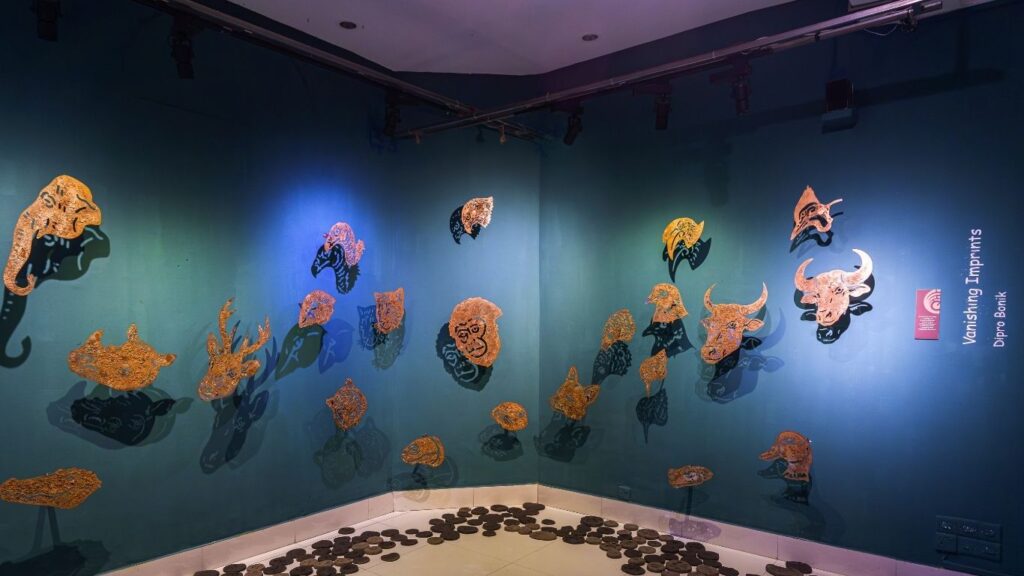
“Everyone walks upon the earth, yet the earth silently endures it all.”
The classical principles of art—rhythm, composition, proportion, and harmony—are often disrupted within surrealist practice. Instead, surrealism privileges the artist’s subconscious experience, where contradictory ideas coexist and meaning emerges through intuition rather than logic. The artists participating in “In Search of the Earth” have consciously avoided the familiar path of conventional aesthetics. Instead, they have embraced symbolic language as a powerful means of expression.
Art will always invite questions, responses, and counter-responses. It opens pathways toward increasingly complex layers of thought. To continue this journey, artists must keep searching for new visual languages and new modes of expression.
May this search continue.
-Rezaur Rahman, Artist and Writer