
written by: Bappy Linkon Roy
For decades, printmaking has remained one of the most underappreciated disciplines in Bangladesh’s visual arts. Despite being a significant branch of fine art, it has often been treated as secondary to painting. Yet it is through this very medium that a distinct artistic language has evolved, leaving an enduring mark on the country’s art history.
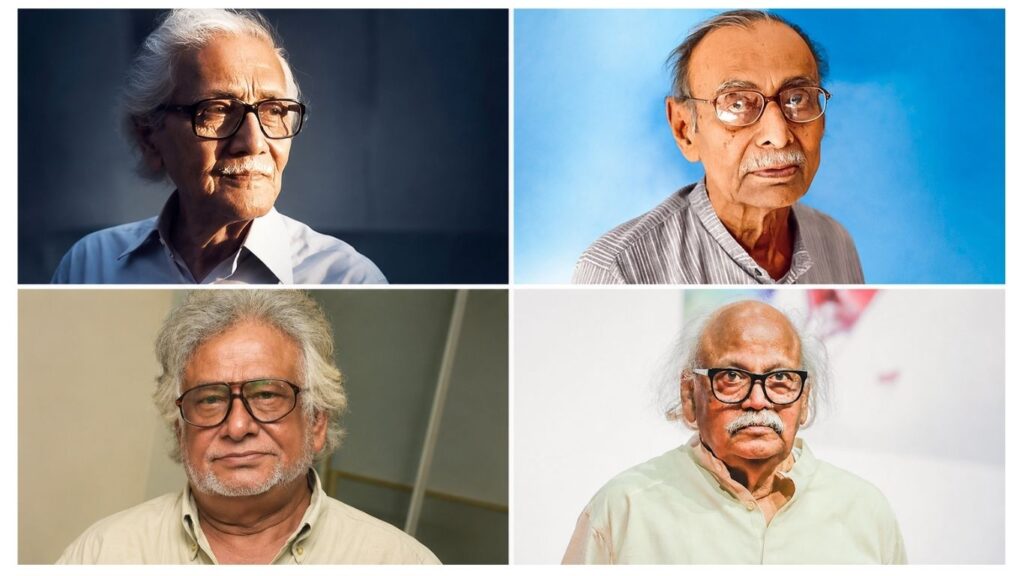
The story of Bangladeshi printmaking is inseparable from four pioneering artists—Safiuddin Ahmed, Mohammad Kibria, Monirul Islam, and Rafiqun Nabi. Though they differed in age, education, artistic philosophy, and international exposure, each embraced printmaking as the most powerful medium for personal expression. They studied in London, Tokyo, Madrid, and Athens, respectively. However, rather than returning with borrowed aesthetics, they came back with new visual languages rooted in their own artistic identities.
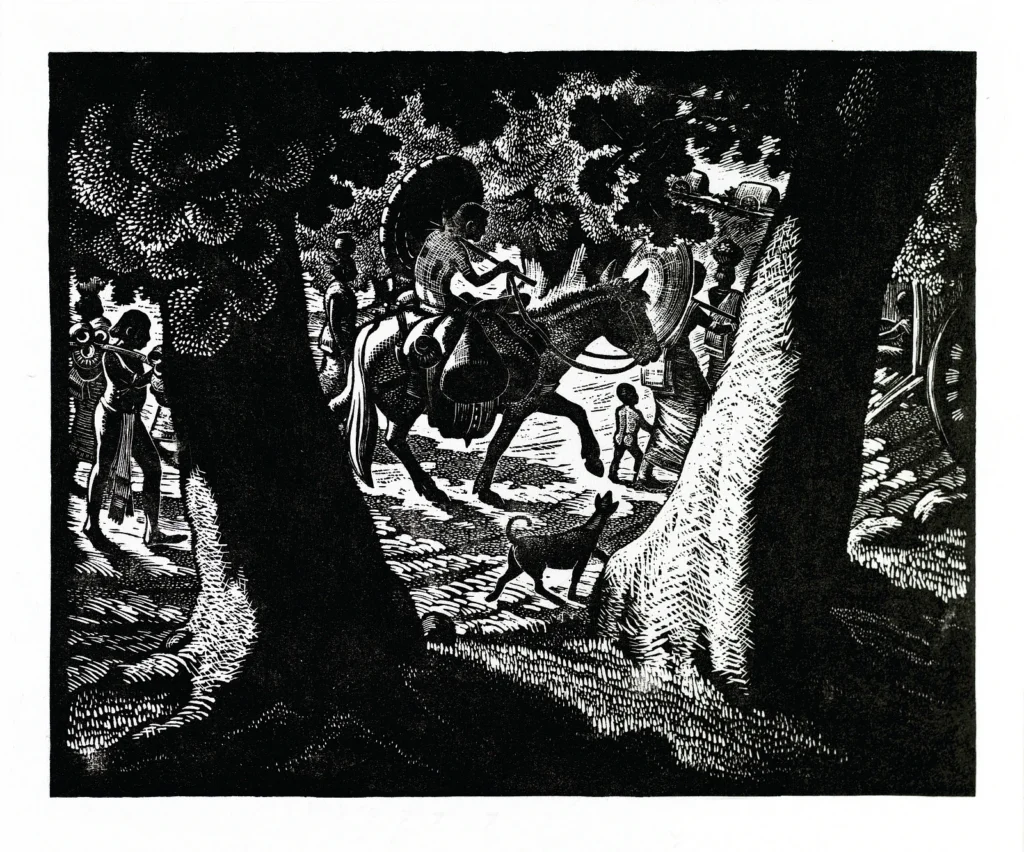
Safiuddin Ahmed laid the institutional foundation of printmaking in Bangladesh. In 1948, he established the Printmaking Department at the Dhaka Art Institute and led it for more than three decades, giving the discipline both academic recognition and artistic credibility. Through his mastery of wood engraving, he introduced a refined visual vocabulary defined by delicate lines, subtle contrasts of light and shadow, and evocative depictions of rural Bengal. His artistic philosophy was rooted in achieving the greatest expressive power through the simplest means.
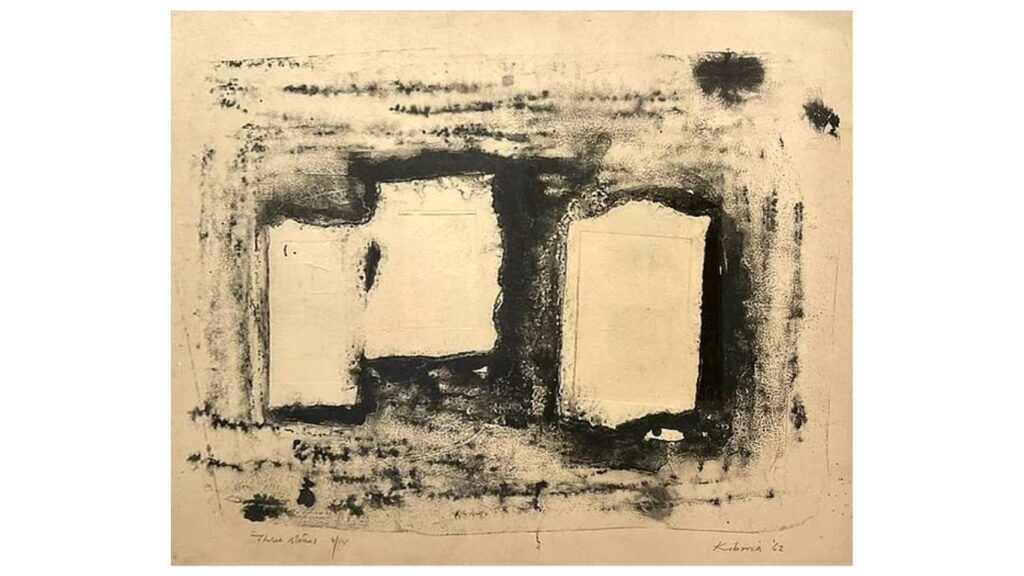
Building upon that foundation, Mohammad Kibria opened a new chapter by introducing abstraction into Bangladeshi printmaking. While studying lithography in Japan, he became fascinated by the texture, grain, and material qualities of lithographic stone. Works such as Two Flowers and Fading moved beyond representational imagery, placing emotion and atmosphere at the center of artistic expression. Upon returning to Bangladesh, he transformed printmaking into a modernist language that profoundly influenced contemporary art in the country.
Monirul Islam elevated Bangladeshi printmaking to international prominence. After moving to Spain, he not only mastered the art of etching but also developed his own innovative Free-Bite Etching technique, earning widespread international recognition. His works are distinguished by their expressive use of emptiness, memory, decay, and calligraphic abstraction. From the Agony series inspired by Bangladesh’s Liberation War to his later abstract compositions, Monirul demonstrated that printmaking could speak fluently in the language of global contemporary art.
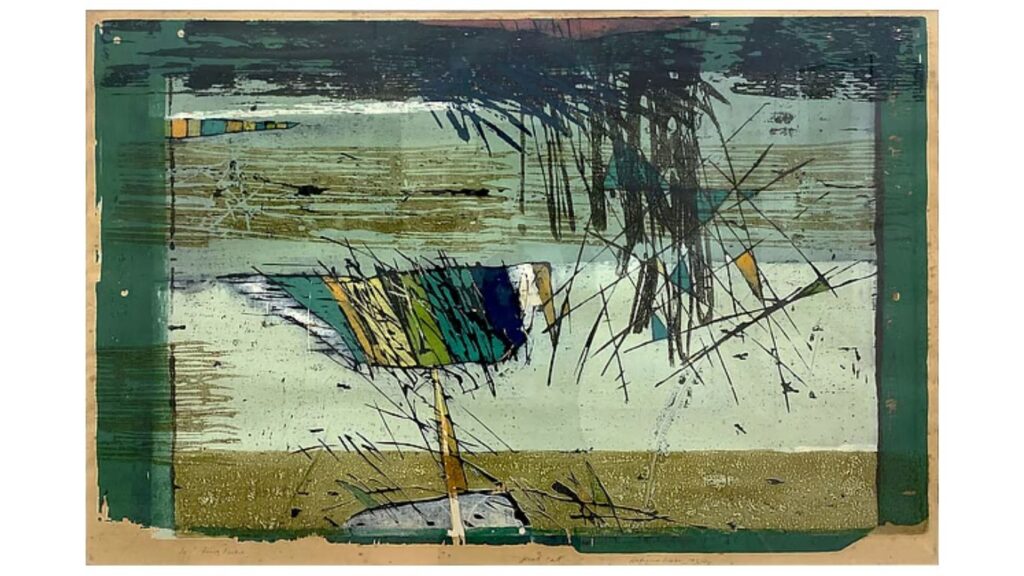
Rafiqun Nabi, meanwhile, expanded the possibilities of printmaking by incorporating bold colors, social commentary, and the natural textures of wood. His artistic training in Greece inspired a fresh approach to color woodcuts, allowing the grain of the wood itself to become an integral part of the composition. Works such as Riverscape with Fishes and A Man Child Fallen from a Heart combine visual experimentation with reflections on social reality and human suffering. Much like his iconic Tokai character, his prints give voice to marginalized people and the political realities of Bangladesh.
Together, these four artists trace the evolution of Bangladeshi printmaking. Safiuddin established its foundations; Kibria introduced abstraction; Monirul gave it an international identity; and Rafiqun Nabi reconnected it with the lives, struggles, and aspirations of ordinary people. Collectively, they shaped not merely a medium, but an entire artistic tradition.
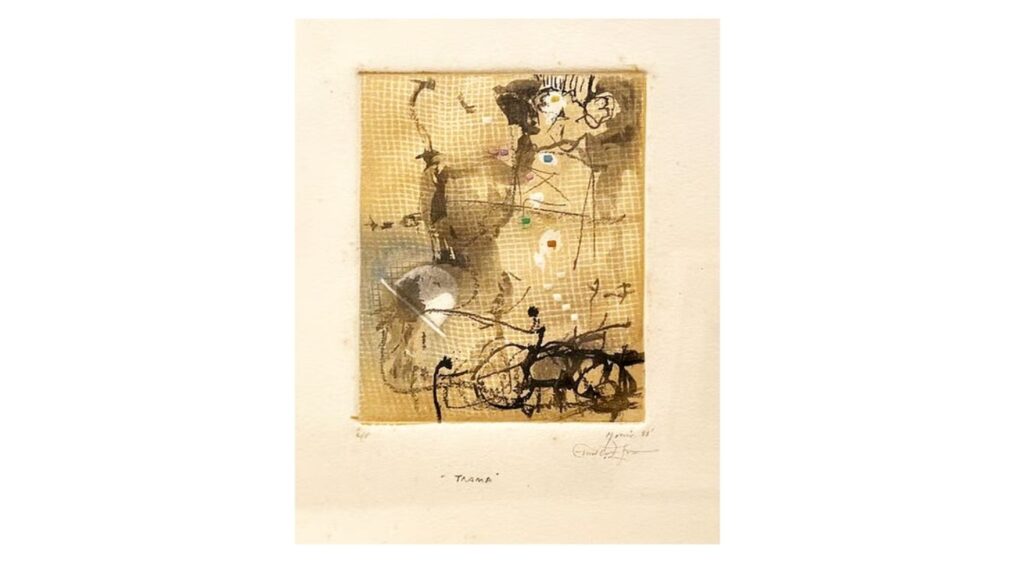
The uniqueness of printmaking lies in its dialogue between the artist and the material itself. The grain of wood, the texture of stone, the etched marks of acid on metal plates, and the pressure of the printing process all become active elements of artistic expression. Unlike painting, where the medium is often subordinate to the artist’s hand, printmaking allows the material to participate in shaping the final image.
Although printmaking has long been regarded as a secondary art form in Bangladesh, these four pioneers proved otherwise. Their works demonstrate that the significance of art is determined not by its medium, but by the artist’s vision, imagination, and creative power. Through their pioneering contributions, Bangladeshi printmaking has transcended national boundaries and secured a distinctive place on the international map of contemporary art.
Sources:
- https://en.banglapedia.org/index.php/Safiuddin_Ahmed?utm_source=chatgpt.com
- https://en.wikipedia.org/wiki/Mohammad_Kibria?utm_source=chatgpt.com
- https://www.edgegallery.com.bd/team/monirul-islam?utm_source=chatgpt.com
- https://dbfcollection.com/artist/rafiqun-nabi/?utm_source=chatgpt.com
- https://www.bengalfoundation.org?utm_source=chatgpt.com
- https://www.shilpakala.gov.bd?utm_source=chatgpt.com
Read article of Safiuddin Ahmed: https://galleryhalkhata.com/artists/safiuddin-ahmed/