
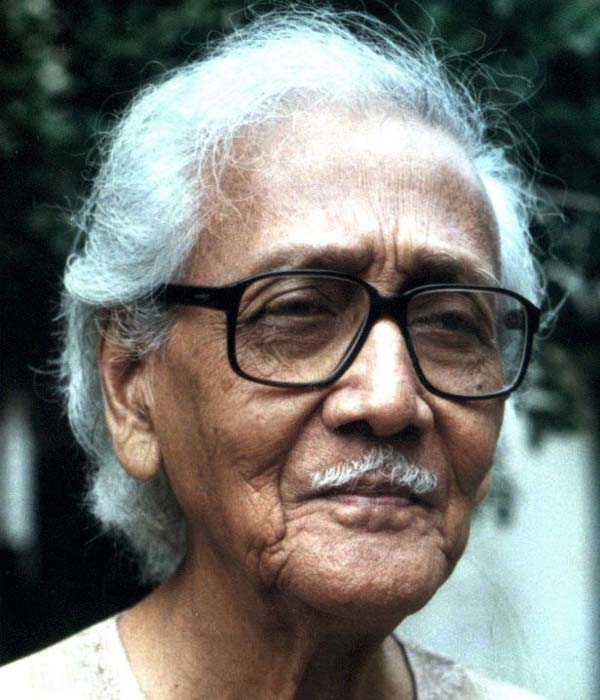
Safiuddin Ahmed (1922–2012) is revered as one of the founding figures of modern art in Bangladesh. A master printmaker, painter, and educator, Ahmed’s artistic journey spanned more than six decades, during which he combined technical brilliance with deep emotional and philosophical inquiry. His works are widely celebrated for their sophisticated composition, subtle color palette, and profound thematic depth, reflecting the social, cultural, and natural landscape of Bengal.
Education and Artistic Formation
Safiuddin Ahmed was born in 1922 in Kolkata (then Calcutta), which was part of undivided India. His early exposure to art came from his surroundings and his inherent talent. He joined the Government School of Art in Calcutta in 1936, where he studied under the British academic system but soon gravitated toward indigenous subjects and themes. He graduated with distinction in 1942, earning a diploma in fine arts with a specialization in printmaking.
His early years in Kolkata were shaped by the political unrest, the rise of the Bengal famine, and the growing momentum for independence from British rule. These experiences would later become central themes in his work.
After the partition of India in 1947, Safiuddin migrated to Dhaka, then the capital of East Pakistan (now Bangladesh). There, he became one of the founding members of the Government Institute of Arts (now the Faculty of Fine Arts, University of Dhaka), established in 1948 under the leadership of Zainul Abedin. This institution laid the groundwork for modern art education in Bangladesh, and Safiuddin played a pivotal role in shaping its direction.
In 1958, he received a UNESCO Fellowship to study at the Central School of Arts and Crafts in London, where he further specialized in printmaking techniques, particularly etching and engraving. This period helped him refine his technical skills and exposed him to European modernist movements, which influenced but never overshadowed his deeply rooted Bengali sensibility.
Form and Medium
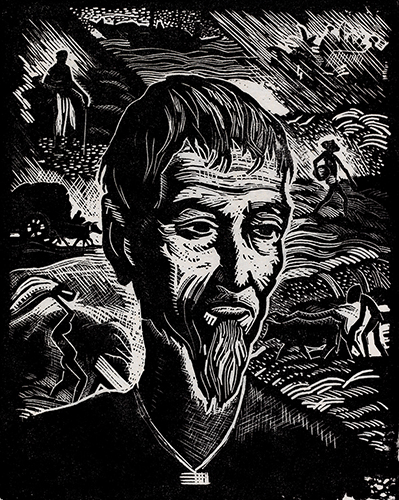
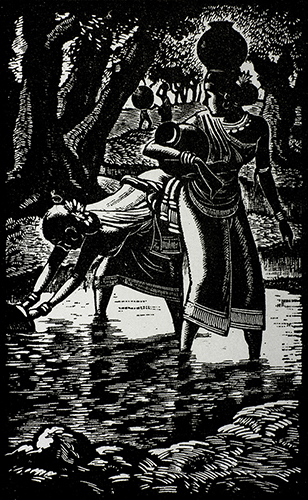
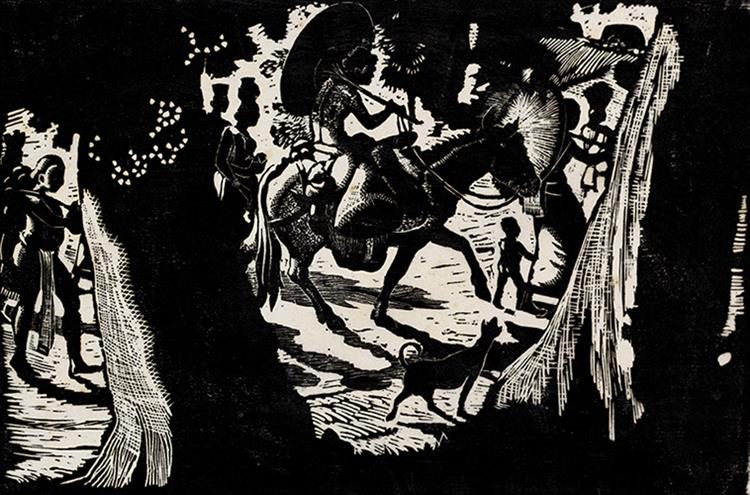
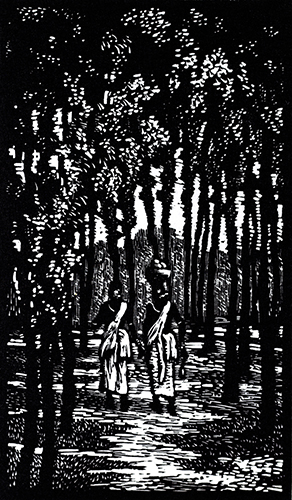
Safiuddin Ahmed is best known for his contributions to printmaking, especially wood engraving, etching, aquatint, and intaglio. In the early stages of his career, he worked primarily with black and white etchings and woodcuts, creating works with bold lines and deep textures. His command over printmaking techniques was unparalleled in South Asia at the time.
Later in his career, he shifted more toward painting—using oils, watercolors, and mixed media. However, even his paintings retained the structural discipline and tonal richness of a printmaker’s eye.
Ahmed’s forms are often minimalist yet profound. His compositions tend to avoid excessive detailing, focusing instead on the harmony of shapes, balance of light and shadow, and a meditative rhythm. Whether depicting figures, landscapes, or abstract forms, his work always
Color and Technique
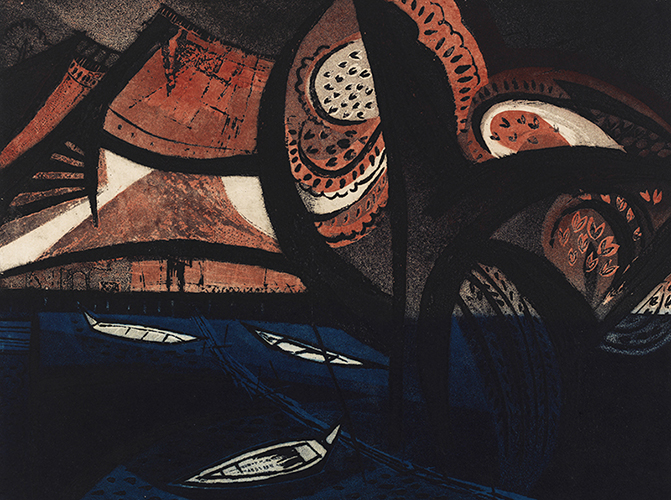
Unlike many of his contemporaries who used bright and vibrant palettes, Safiuddin Ahmed was drawn to subdued, earthy tones. His works in watercolor and oil were marked by a restrained and mature use of color—muted blues, browns, greys, and ochres dominate his palette. This allowed him to convey somber, reflective moods and a sense of timelessness. communicates a quiet dignity and spiritual undertone.
His technique was meticulous. In both printmaking and painting, he paid careful attention to texture and depth. Layers of color were applied in glazes to create luminosity. In his engravings, delicate cross-hatching and tonal variation revealed his deep understanding of light and space.
Safiuddin’s aesthetic was often compared to music—slow, harmonious, and meditative. His approach to composition and tonal structure resembled the unfolding of a raga, filled with internal balance and movement.
Themes and Inspirations
Safiuddin Ahmed’s themes evolved over the years, reflecting the sociopolitical changes of his time, as well as his personal philosophy. The major themes in his work include:
1. Rural Bengal
One of Ahmed’s central subjects was the rural life of Bengal—ploughmen in the fields, rivers, boats, fishermen, and pastoral landscapes. His depictions of village life are poetic and nostalgic, evoking a deep emotional connection with the land. His famous works like “Ploughing” (1950s) and “The Flood” capture both the serenity and the harsh realities of rural existence.
2. Nature and Environment
Ahmed’s love for nature is evident in his serene riverine landscapes, abstracted hills, and flowing forms that suggest water and wind. He viewed nature not just as scenery but as a living, breathing presence. His portrayal of nature is never romanticized—instead, it carries a spiritual and philosophical depth, rooted in experience and memory.
3. War and Suffering
The Bangladesh Liberation War of 1971 deeply affected Ahmed, and although he never depicted violence directly, his works from this period reflect a haunting, somber mood. Abstract and symbolic forms began to appear more prominently, hinting at loss, displacement, and resilience.
4. Spirituality and Abstraction
In the later part of his life, his work became increasingly abstract and introspective. He moved away from representational forms and began to explore more symbolic and metaphysical concepts. This transition reflected his inner spiritual journey and philosophical inquiry.
Style and Influence
Safiuddin Ahmed’s style is often described as modernist, but his modernism was deeply rooted in the soil of Bengal. He synthesized the formal qualities of Western art—structure, abstraction, perspective—with indigenous subjects and a Bengali visual sensibility.
While influenced by European masters like Rembrandt and Whistler in terms of technique, he remained dedicated to telling local stories. His stylistic evolution moved from figurative realism to lyrical abstraction, always retaining clarity, balance, and emotional depth.
He was also influenced by Japanese printmaking in terms of technical precision and the spiritual stillness of form. However, his art always maintained a unique voice—quiet, thoughtful, and deeply humane.
Awards and Recognition
Over the decades, Safiuddin Ahmed received numerous awards and honors for his contributions to the art of Bangladesh:
- Ekushey Padak (1978): One of Bangladesh’s highest civilian awards for contributions to art and culture.
- Independence Day Award (1996): The highest state honor in Bangladesh, recognizing his lifelong dedication to the arts.
- Bangladesh Shilpakala Academy Award (multiple times).
- His works were exhibited internationally in cities like London, Tokyo, Tehran, and New Delhi, bringing Bangladeshi art to the global stage.
In addition to awards, he held several important positions, including serving as the principal of the Faculty of Fine Arts in Dhaka, mentoring generations of artists who went on to shape the country’s art scene.
Educator and Mentor
Ahmed was not just a prolific artist, but also a dedicated teacher. As one of the founders of the Dhaka Art College, he mentored many leading figures in Bangladeshi contemporary art. His emphasis on technical discipline, cultural grounding, and ethical commitment left a lasting impression on students and colleagues alike.
Legacy
Safiuddin Ahmed passed away on May 20, 2012, but his legacy endures. His works are housed in major public and private collections, including the National Museum of Bangladesh, Bengal Foundation, and many international galleries. He is remembered not only as a master printmaker and painter but as a cultural icon who shaped the visual language of modern Bangladesh.
His art remains a testament to the power of restraint, introspection, and rootedness in cultural identity. In an age of noise and spectacle, Safiuddin Ahmed’s work continues to speak in a quiet, unwavering voice—of land, memory, struggle, and transcendence.
Safiuddin Ahmed’s contribution to Bangladeshi art is monumental. He bridged tradition and modernity, blending European techniques with the soul of Bengal. Through his prints and paintings, he chronicled the emotional and spiritual landscape of his time, offering viewers a space to reflect and reconnect with their roots.
In celebrating Safiuddin Ahmed, we honor not just an artist, but a thinker, teacher, and visionary who gave visual form to the inner rhythms of life—earthy, lyrical, and profoundly human.
Watch our video of Safiuddin Ahmed(Bangla): https://youtu.be/a3qJ2AvIgBs