
written by: News Desk
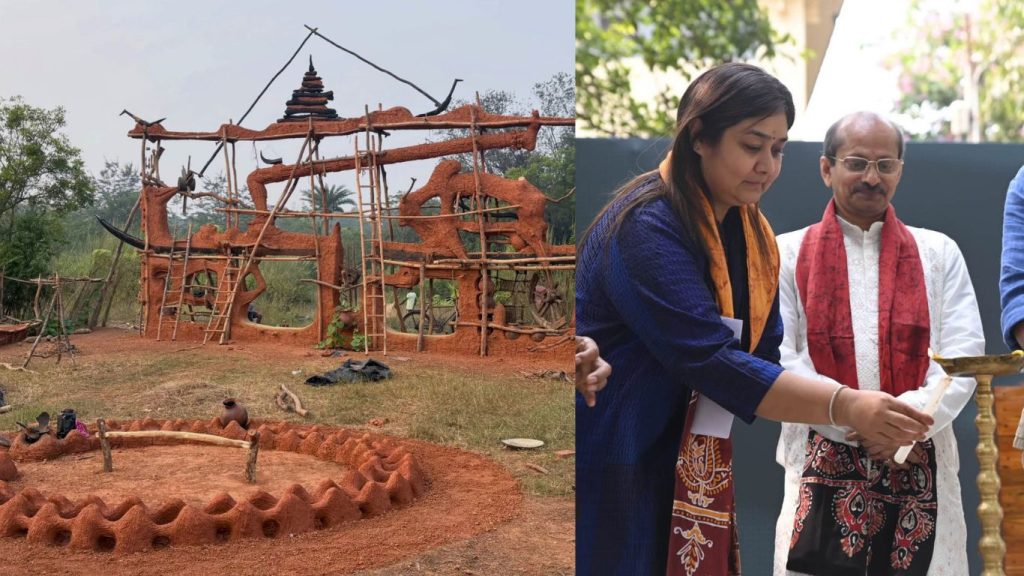
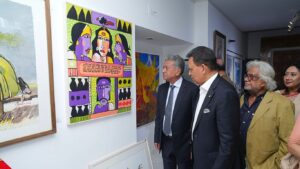
The second edition of the Bengal Biennale opened in Santiniketan on 25 November, with exhibitions in nine venues across Kolkata scheduled to begin on 28 November. Inspired by Jibanananda Das’s poem Banalata Sen and the ecological imagery of wild vines, this year’s edition explores buried histories, memory, the environment, resistance and the possibilities of collective survival.
The second edition of the Bengal Biennale is now underway in West Bengal, India. Titled Banalata, the event runs from 25 November 2026 to 2 January 2027 across various cultural and artistic spaces in Kolkata and Santiniketan. Moving beyond the conventional boundaries of galleries, the Biennale brings together historic buildings, a former prison, old residences and natural settings as integral parts of its artistic exploration.
According to the programme published on the Biennale’s official website, the event opened on 25 November at the courtyard of Kala Bhavana in Santiniketan. The opening day also featured a discussion titled Banalata | Entangled, alongside exhibitions and cultural programmes at Nandan Museum and the Santiniketan Society of Visual Art and Design (SSVAD). Exhibitions across nine venues in Kolkata are scheduled to open on 28 November. The Alipore Museum will host the opening programme, accompanied by discussions and musical performances.
The title Banalata draws inspiration from Bengali poet Jibanananda Das’s celebrated poem Banalata Sen, published in 1942. It also evokes the spreading growth of wild vines, whose intricate networks extend across and beneath the ground. Bringing these two references together, the curators explore obscured histories, invisible networks of human relationships, ecological interdependence and different forms of resistance.
In the curatorial vision, Banalata is more than a literary reference. It offers an artistic framework for examining the possibilities of survival, rest, resistance and collective joy amid contemporary political, social and environmental crises. The interconnectedness of personal experience, political realities and the natural environment forms a central concern of the Biennale.
In Kolkata, the Biennale will take place across nine venues: Alipore Museum, Indian Museum, Kolkata Centre for Creativity, Lalit Kala Akademi, New Empire, Siddhi & Muni Art Studios, The Dockyard Co., The Red Bari and TRI Art & Culture.
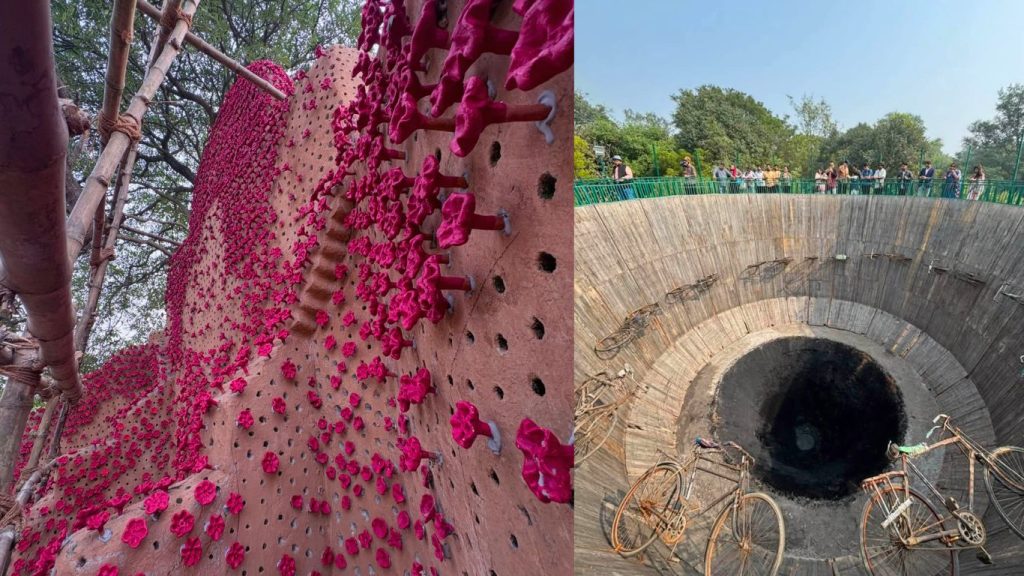
In Santiniketan, the participating venues include Nandan Museum, Tokaroun, Santiniketan Society of Visual Art and Design, Artshila, Sculpture Park, Somnath Hore Studio and Kritika Arts Space.
The participating artists include Atul Dodiya, Arpita Singh, Amar Kanwar, Jitish Kallat, Jogen Chowdhury, Tejal Shah and Apichatpong Weerasethakul, among others from India and the international art community. The programme also features works by significant figures in the history of Indian art, including Rabindranath Tagore, Nandalal Bose and Benode Behari Mukherjee.
According to published reports citing the organisers, more than 40 projects have been newly created or developed specifically for this edition. Other works have been adapted for presentation in response to the character and context of particular sites.
One of the defining features of this edition is its approach to exhibition spaces. Former prisons, old residences and natural landscapes are not treated merely as locations for displaying artworks. Their histories, memories and environmental contexts are brought into the artistic conversation. This approach allows visitors to engage not only with the artworks but also with the social realities and historical layers embedded in the places where they are presented.
The second edition of the Bengal Biennale is jointly curated by Chander Haat, a Kolkata-based artist collective, and Ritika Biswas, an independent curator and researcher. The event is organised by the Gameplan Foundation. Following the inaugural edition, held from 29 November 2024 to 5 January 2025, the Biennale once again connects the artistic and cultural landscapes of Kolkata and Santiniketan.
By approaching art as a medium of relationships and coexistence rather than as an isolated exhibition experience, Banalata brings together questions of forgotten histories, human interdependence and the relationship between people and nature. Through its diverse venues, artistic projects and curatorial perspectives, the Biennale invites audiences to reconsider these concerns through the language of contemporary art.