
written by: News Desk
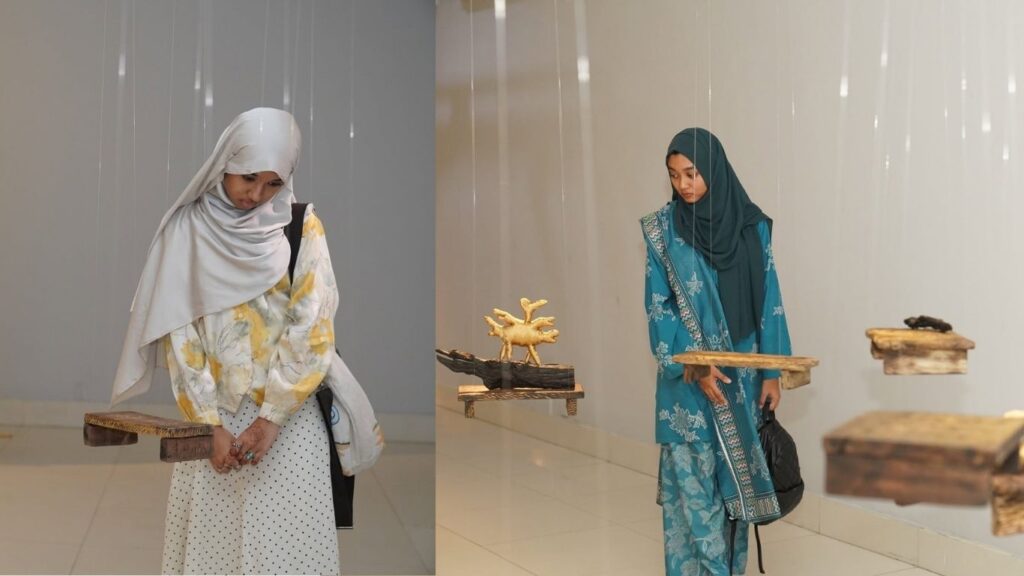
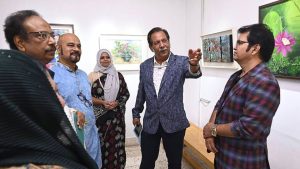
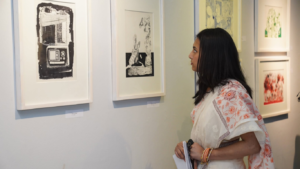
A solo exhibition by artist Moni Majhi, titled Non-Duality (Advaita), opened on Friday at La Galerie, Alliance Française de Dhaka, in Dhanmondi. Centred on the natural environment, folk beliefs, cultural heritage and the intricate relationship between people and nature in the Sundarbans, the exhibition offers an artistic reflection on coexistence and interconnectedness.
The conceptual foundation of the exhibition draws on the philosophy of non-duality, which emphasises connection and coexistence rather than divisions based on religious identity, belief or different forms of life. The artist traces expressions of this philosophy in the everyday lives, folk traditions and spiritual beliefs of communities in the Sundarbans. In the region’s cultural imagination, Bon Durga and Bonbibi are often understood as manifestations of a shared maternal presence. Similarly, the parallel folk beliefs surrounding Paban Thakur and Paban Pir point to an underlying cultural consciousness that transcends religious boundaries.
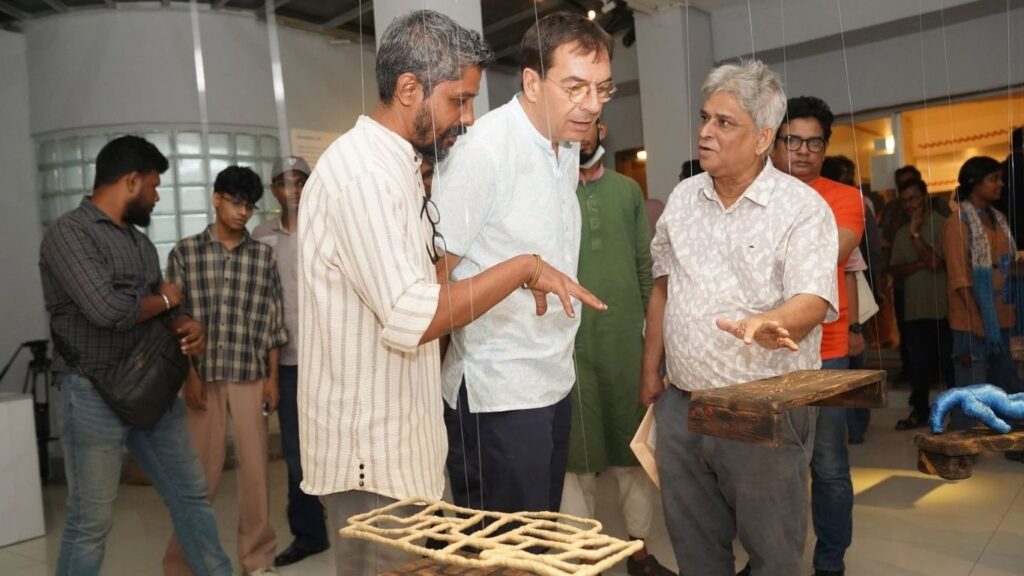
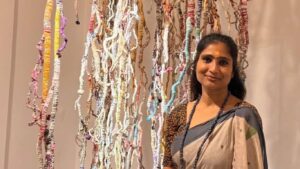
The rivers, forests, tides, saline water, soil and wildlife of the Sundarbans, along with its myths and folk narratives, form significant elements of Majhi’s artistic vocabulary. Everyday objects and customs rooted in local culture also carry particular meaning in the exhibition. The wooden piri (low stool), traditionally used when welcoming guests, is presented as a symbol of hospitality, respect and belonging. The offering of shinni and payesh—traditional food offerings associated with expressions of reverence for nature—also finds a place in the artist’s visual narrative.
Yet Non-Duality is more than a celebration of the natural landscape and cultural heritage of the Sundarbans. It also draws attention to the region’s growing environmental challenges. Climate change, control over natural resources, pressures arising from development and conflicts over power are steadily transforming both the ecosystem and the lives of local communities. Shifting river courses, increasing soil salinity, the loss of wildlife habitats and the erosion of local memory, language and cultural identity are all part of this unfolding crisis.
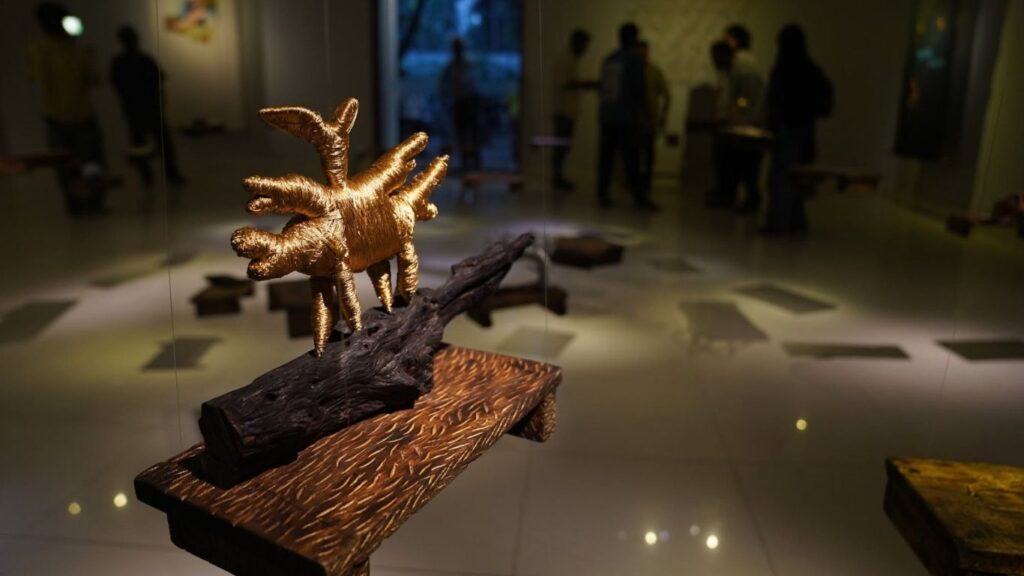
Against this backdrop, the exhibition introduces the idea of ‘green refugees’. The experience of displacement, in this context, is not confined to human beings. Rivers, seeds, trees, plants and animals are also at risk of losing their habitats and natural patterns of existence. The artist thus approaches environmental degradation as a crisis affecting the interconnected fabric of life itself.
Through Non-Duality, Moni Majhi challenges the conventional separation of human beings from the natural world, instead foregrounding their mutual dependence and coexistence. By bringing together the folk knowledge, spiritual beliefs and environmental realities of the Sundarbans with contemporary ecological concerns, the exhibition invites viewers to reconsider humanity’s relationship with nature.
The exhibition will remain open to visitors until 10 November, daily from 3:00 pm to 9:00 pm.