
written by: News Desk
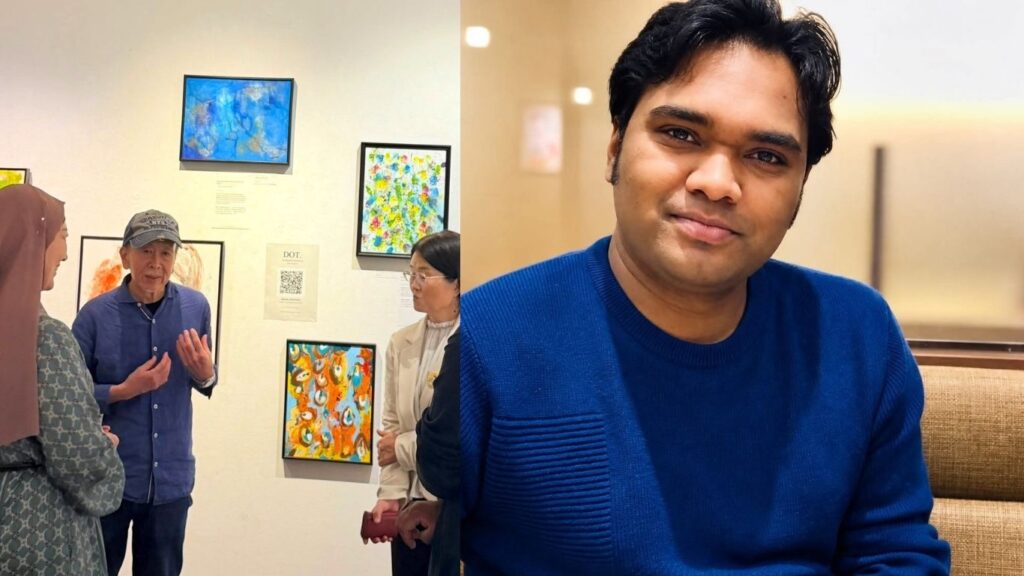
A vibrant presentation of 41 paintings exploring the dialogue between Bengali folk traditions, memory, and Japanese aesthetics
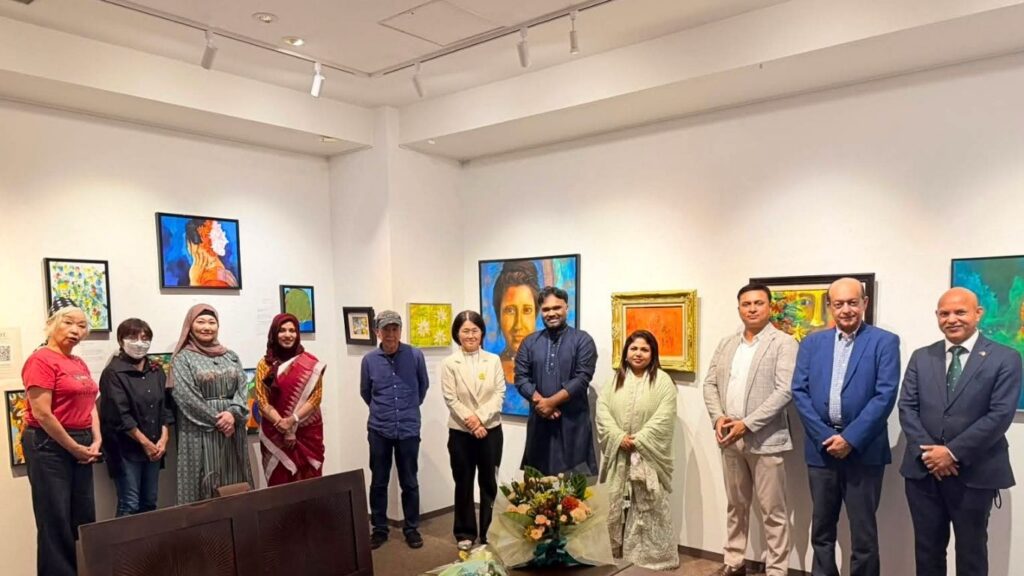
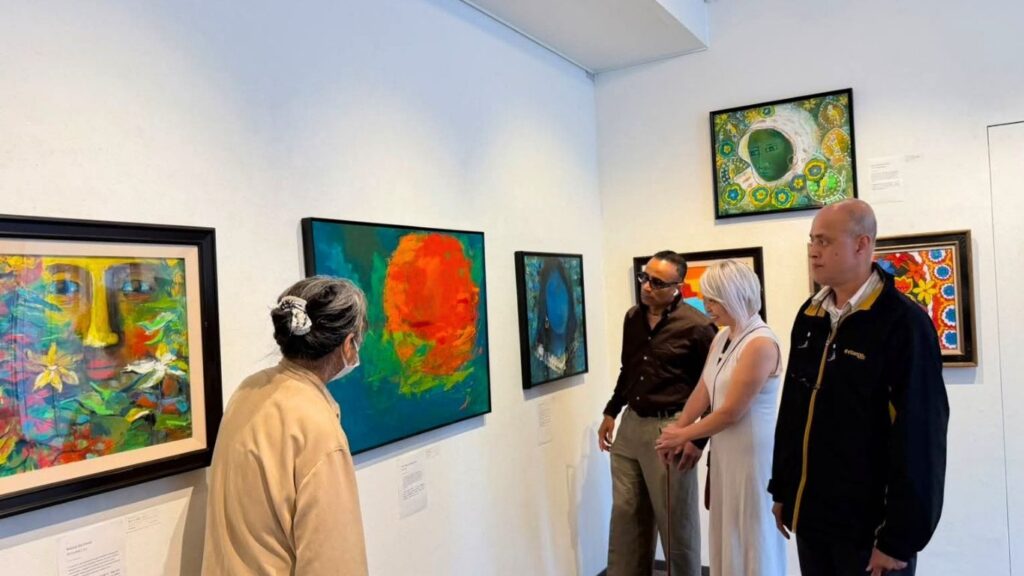
The first solo exhibition of Bangladeshi artist Kamrul Hasan Lipu, titled DOT: The Beginning of Everything, has opened in Yokohama, Japan. Inaugurated on Tuesday, October 20, 2026, at Gallery Shimizu, the six-day exhibition features 41 paintings by the artist. Executed primarily in acrylic and mixed media, the works bring together Bangladesh’s cultural memories, folk ornamentation, questions of identity, and experiences of life in the diaspora through a contemporary visual language.
Based in Japan, Lipu draws on the interplay between his experiences of home and life abroad. On one side are familiar elements of Bengali culture—human faces, sari patterns, birds, flowers, rivers, and folk motifs. On the other is the restraint, structural discipline, and minimalism associated with Japanese aesthetics. The interaction between these two visual traditions lends his paintings a distinctive character.
Colour plays a particularly significant role in Lipu’s work. Deep turquoise, emerald green, and ocean blue appear alongside intense amber, crimson, and golden yellow. Some compositions feature vivid, recognisable forms, while others create an atmosphere of abstraction through layered colours, expressive lines, and rich textures. In his canvases, familiar cultural elements transcend mere decoration, becoming carriers of memory, emotion, and identity.
Reflecting on his artistic vision, Lipu explains that, with the passage of time and distance, his memories of Bangladesh have acquired new forms. Familiar faces, sari patterns, birds, and flowers return through the colours of feeling. By bringing his personal experiences into dialogue with the ornamental language and rhythms of Bengali folk art, he continues to search for a visual language of his own.
His emotional connection to Bangladesh finds expression in recurring motifs such as the red sun, green leaves, rivers, and elements of folk art. For the artist, red and green symbolise life, energy, hope, and growth. Consequently, the colours and cultural memories of Bangladesh do more than evoke his homeland; they also serve as essential elements in the evolving sense of identity he has developed while living abroad.
Among the notable works in the exhibition are Face in Rickshaw Colours, Behind the Petals, Conversations in Folk Imagery, and The Spark of Freedom. The first presents a face amid flowers and ornamental birds. Its vibrant colours, playful outlines, and decorative details evoke the visual language of traditional Bangladeshi rickshaw art.
In Behind the Petals, a woman’s face emerges from a dense arrangement of leaves and blossoms. The stillness in her eyes creates an introspective atmosphere, inviting viewers to consider the emotions concealed beneath the visible surface. In Conversations in Folk Imagery, faces, birds, and flowers flow seamlessly into one another, suggesting a shared visual language through which humanity and nature converge. Meanwhile, The Spark of Freedom employs an intense interplay of green, red, and orange, with white emerging through the centre to evoke the struggle for freedom and the promise of liberation.
Across these works, familiar elements of folk art acquire new meanings through contemporary composition. Rather than simply reproducing traditional imagery, Lipu reinterprets it through the reorganisation of colour, line, and form, connecting inherited cultural references with personal experience. Tradition and modernity thus become participants in an ongoing visual dialogue rather than opposing forces.
Lipu began his formal art education at the University of Development Alternative (UODA) in Dhaka. He later moved to Japan, where he earned an Advanced Diploma in Fine Art (Painting) from the Toyo Institute of Art and Design in Tokyo in 2012. As the founder and chairman of the Kahal Art Group, established in 2008, he has been actively involved in organising art exhibitions, cultural exchange programmes, and international art fairs. One of his principal aims is to introduce the richness of South Asian folk art and culture to wider international audiences.
Although he lives abroad, the cultural memory of Bangladesh remains central to Lipu’s artistic practice. For him, distance does not necessarily signify separation from his roots; rather, it offers an opportunity to rediscover familiar images, colours, and symbols through new meanings and perspectives. DOT: The Beginning of Everything brings this continuing exploration into focus through a diverse collection of paintings.
Looking ahead, the artist plans to present the collection in Bangladesh, creating an opportunity to engage directly with audiences at home and learn from their responses to the works.
The exhibition DOT: The Beginning of Everything runs from October 20 to 25, 2026, at Gallery Shimizu in Yokohama, Japan.