
written by: News Desk
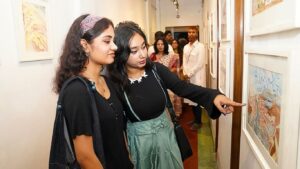
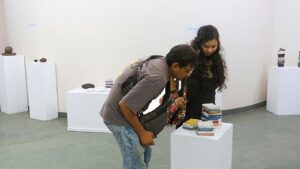
Metal is a demanding medium in sculpture. Its weight, strength and labor-intensive processes offer particular possibilities to an artist, while also imposing certain limitations. Sculptor Toufiqul Rahman has worked with this medium for decades. His solo exhibition, ‘Line, Form, Stability’, brings together sculpture and drawing, offering an overview of several recurring concerns in his long artistic practice. Held at Kala Kendra in Dhaka from 11 September-5 October 2026, the exhibition brings these aspects of his work into focus.
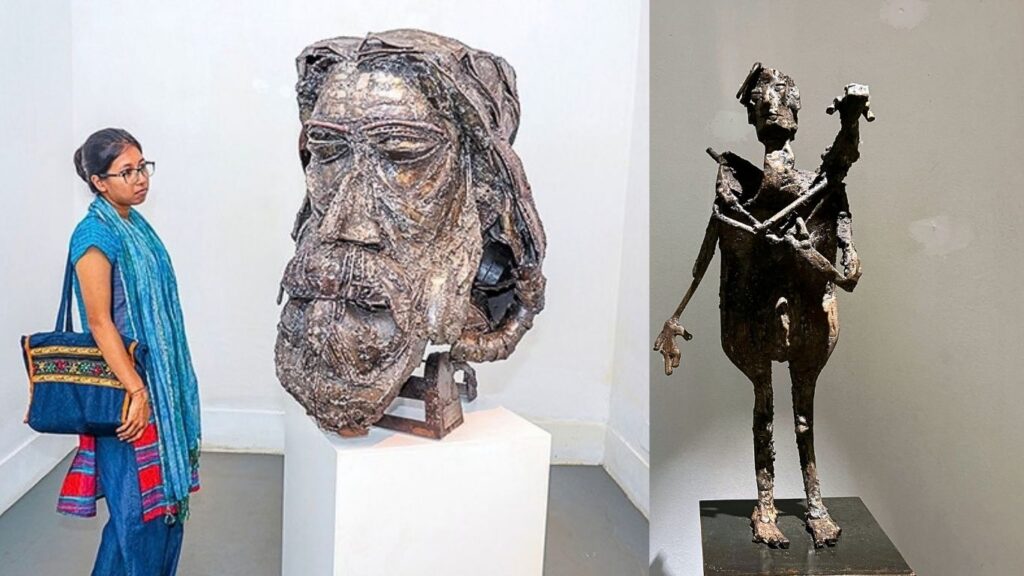
Rahman primarily works with mild steel (MS) sheets and arc welding. Rather than pursuing the smooth surfaces often associated with metal sculpture, he gives importance to the material’s natural and process-generated textures. Burnt, rough, compressed and uneven surfaces are frequently retained as part of the work. The marks left by welding also remain visible, becoming an integral element of the sculptures.
His relationship with metal has a personal history. He spent his childhood in the industrial area of Tejgaon, where collecting pieces of metal as a form of play introduced him to the material at an early age. Although his formal training in fine art, followed by an experience with clay modelling in Santiniketan, broadened his artistic practice, metal eventually became his primary medium.
His working process leaves limited room for predetermined designs. As the artist explains, “I do not make a layout before starting a work. If I make a layout, I feel that I become confined to a particular place.” This approach allows him to remain open to changes in form and decisions that emerge during the making process. He also works independently, producing his sculptures without assistants.
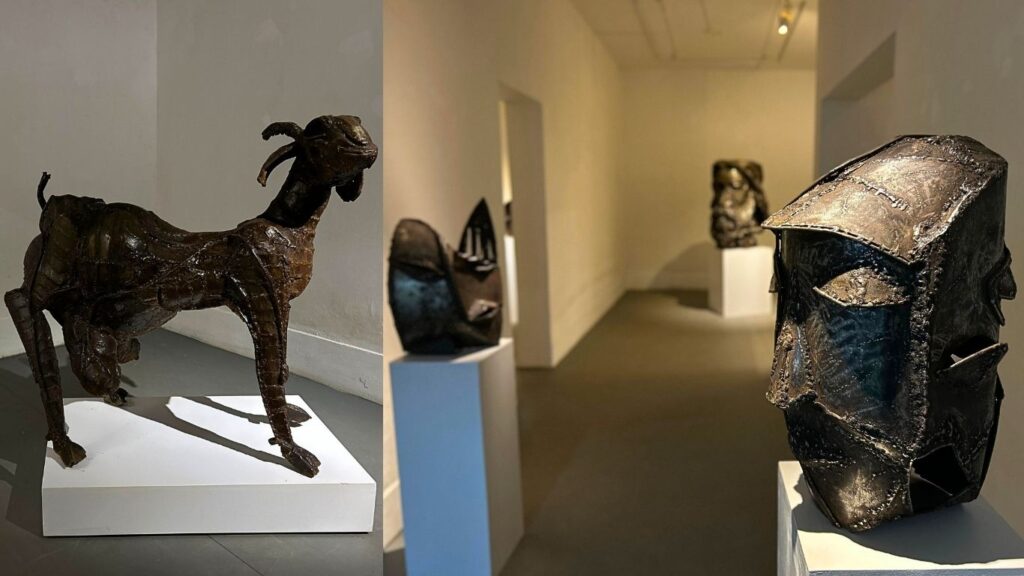
Among the works in the exhibition are ‘Merged’ and ‘Distraction’. In ‘Merged’, a geometric arrangement is used to construct a facial form. Created through diagonal welding and the connection of different planes, the work presents the familiar image of a face through fragmented and intersecting forms rather than direct representation.
‘Distraction’ makes use of sharp angles and geometric structures. As suggested by its title, the work attempts to translate a state of disrupted attention or psychological hesitation into form.
The sculpture ‘Motherhood’ is based on the figure of a goat. The animal’s body and posture are associated with the protective instinct and concern of a mother for her offspring. Through the representation of a particular animal, the work addresses a more familiar and broadly recognizable human experience.
One of the larger works in the exhibition is ‘Eternal Poet’, a sculpture of Rabindranath Tagore. Made from welded steel, the work incorporates complex welding techniques in the treatment of the poet’s beard and moustache. The rough surface of the metal and the sharp lines give the familiar image of Tagore a distinct sculptural vocabulary. The work is also connected to the artist’s longstanding interest in Tagore.
Alongside the sculptures, the exhibition includes drawings featuring people, animals and fragments of the human body. Although the medium is different, these works share certain concerns with the sculptures, particularly the exploration of the body, form and line. Rahman has said that he intends to move further towards abstraction in his future work.
Explaining the title of the exhibition, Rahman says, “Line captures form, while stability refers to a kind of stillness and balance in the work.” His explanation establishes a direct relationship between the three terms in the title. Line leads to form, while form acquires stability through a particular sense of weight and balance.
According to curator Wakilur Rahman, weight and stillness are among the notable characteristics of Toufiqul Rahman’s sculptures. The relationship between sculpture and drawing is also important to the exhibition’s overall presentation. The three-dimensional weight of the sculptures is placed alongside the linear structures of the drawings, allowing two aspects of the artist’s practice to be viewed together.
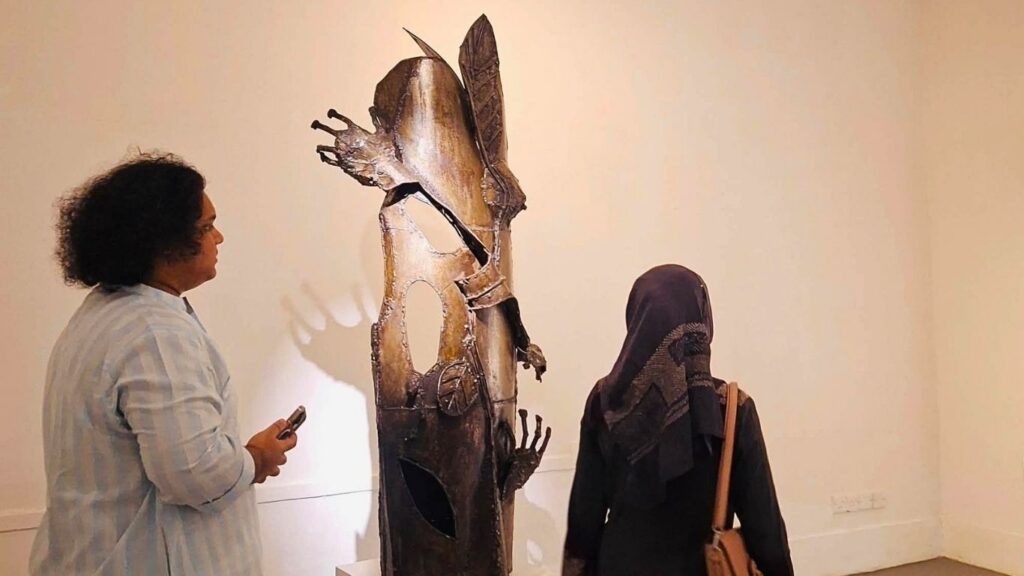
The limitations of metal remain an important consideration in Rahman’s work. The geometric forms produced through cutting, bending and welding interact with light and shadow to create some of the sculptures’ defining visual qualities. Light falling on uneven surfaces and sharp edges produces variations in texture and density across the same work.
Over more than five decades of artistic practice, Toufiqul Rahman has developed a sustained engagement with metal as his principal medium. ‘Line, Form, Stability’ brings together several recurring elements of this practice—the textures of metal, welding, geometric structures, representations of the human body and animals, and an interest in stable forms. The drawings provide another perspective on his artistic language. His stated interest in moving from recognizable forms towards greater abstraction may offer a direction for his continuing practice.
Exhibition Information
Title: Line, Form, Stability — Sculpture and Drawing
Artist: Toufiqul Rahman
Curator: Wakilur Rahman
Dates: 11 September-5 October 2026
Time: 4:00 PM–8:00 PM
Venue: Kala Kendra, 9/3, Block-D, Lalmatia, Dhaka 1207, Bangladesh